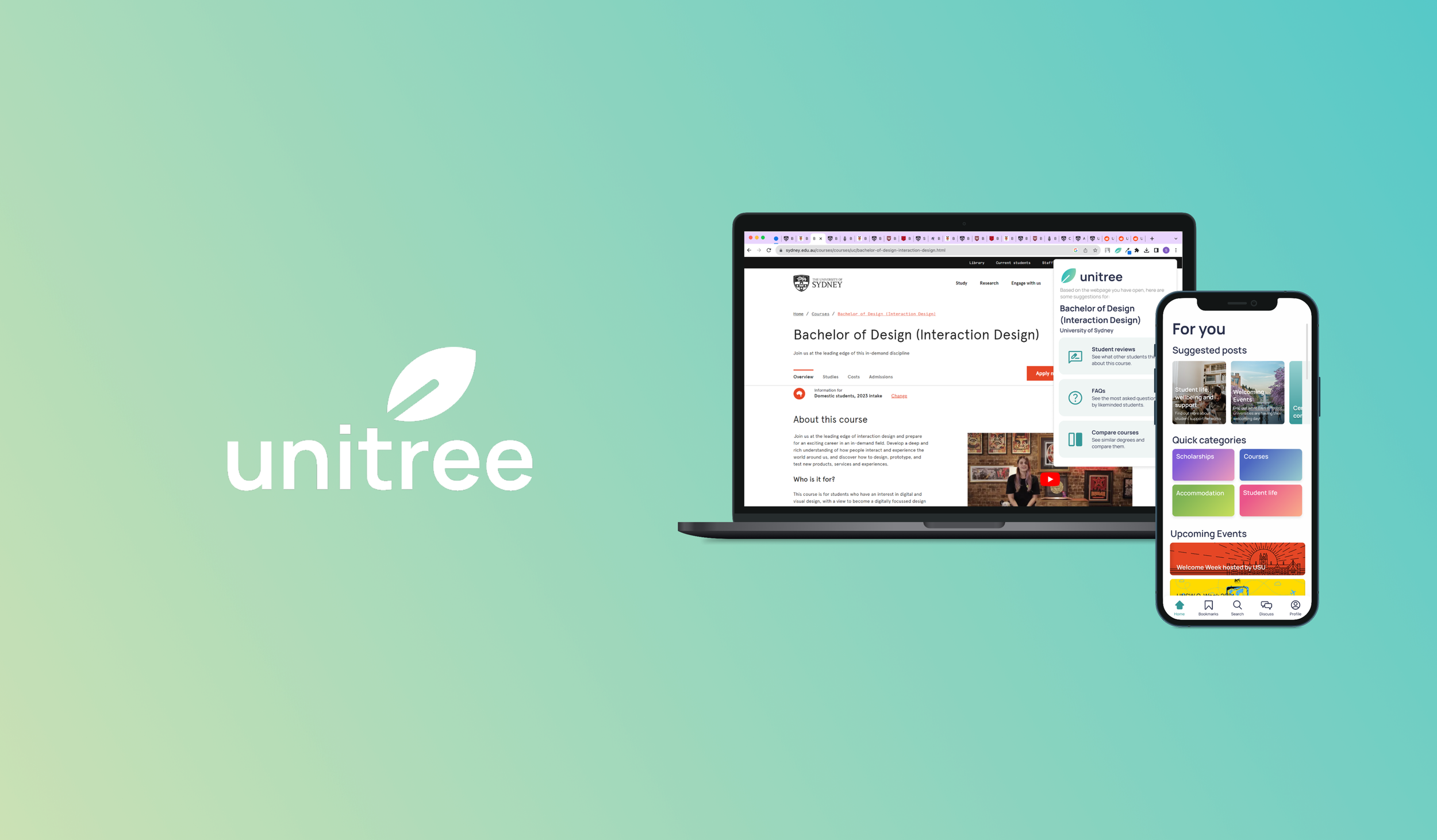
Promotional Video | Final Solution

Improving the transition from high school to university.
Leading the UX research and contributing to the end-to-end UX/UI design, this project explored how students could be better supported during the transition from high school to university. Inspired by the challenges experienced during COVID-19 lockdowns, the initiative delivered an omni-channel platform that connects students with shared experiences, guidance, and university resources to foster belonging and informed decision-making.
Key contributions
Research Leadership | Defined the problem space and led a mixed-method research approach combining online ethnography, surveys, and semi-structured interviews.
Insight Synthesis | Facilitated affinity mapping and thematic analysis, translating findings into personas and storyboards that guided the design direction.
Concept & Experience Strategy | Led concept exploration and prioritisation activities, helping define the omni-channel ecosystem and ensuring the solution addressed key user needs.
UX/UI Design | Owned the design of key features, including discussion boards, profiles, bookmarks, and web extension functionality, while collaborating with two designers to create a cohesive omni-channel experience across the mobile app and browser extension.
Communication & Storytelling | Planned, recorded, and edited a scenario-based video prototype to communicate the end-to-end experience and demonstrate accessibility considerations across the ecosystem.

Problem Area
Context
Experiences navigating COVID-19 lockdowns revealed an opportunity to better support students entering higher education. This led to the definition of the problem space and the initiation of research into the transition between high school and university, with a focus on understanding the challenges that contribute to student disengagement and attrition.
Primary Research
I defined and led a triangulated research approach to build a comprehensive understanding of the problem. Online ethnography across university forums identified common student concerns, while surveys with 42 participants and semi-structured interviews provided both quantitative and qualitative insights into transition challenges and support needs.
Research Synthesis
Affinity mapping was used to synthesise research findings and uncover key themes. These insights informed the development of three personas and storyboards, providing a foundation for ideation and experience design.
(carousel containing affinity diagrams, personas, and storyboards.)
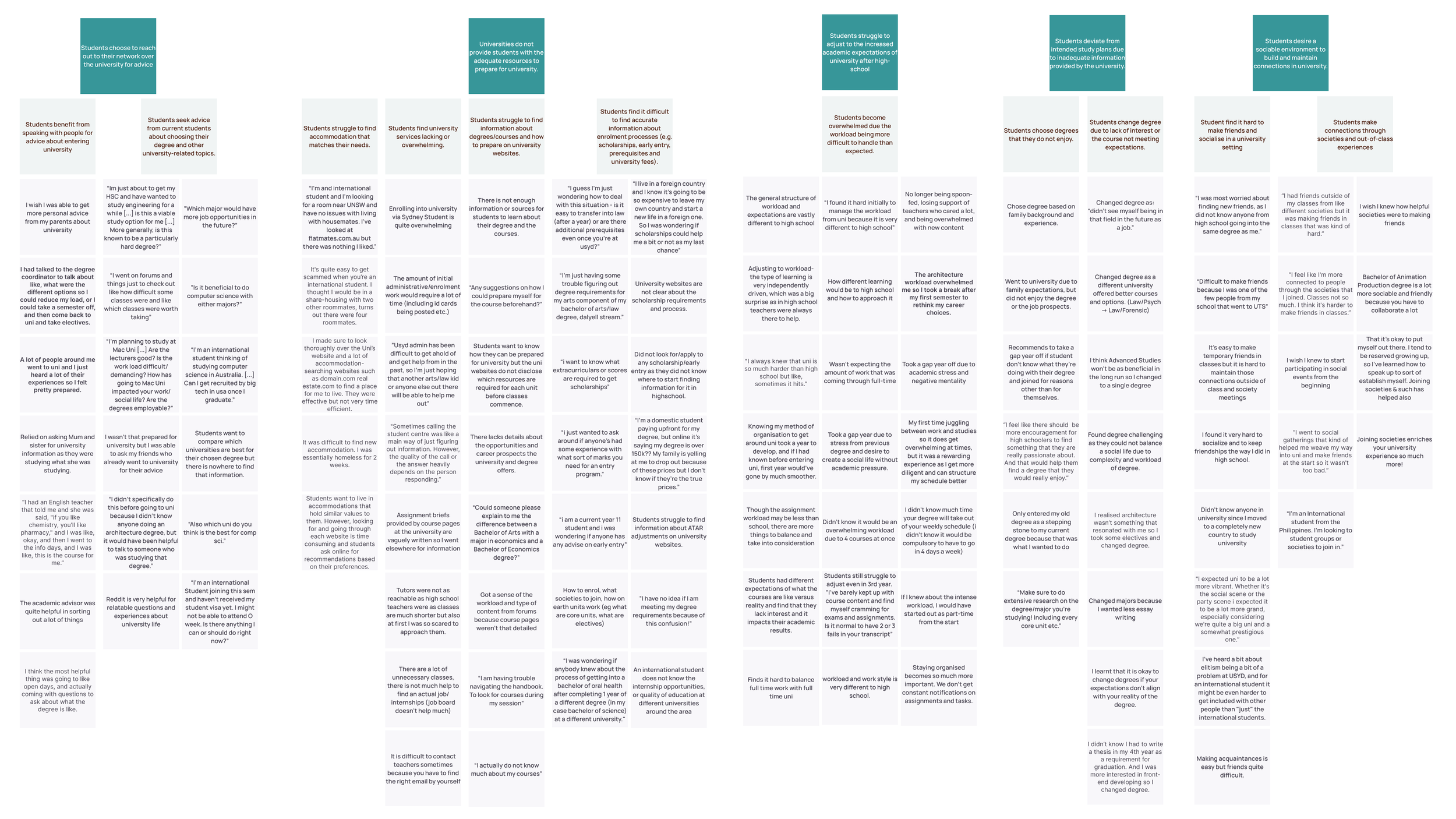
Affinity Diagram
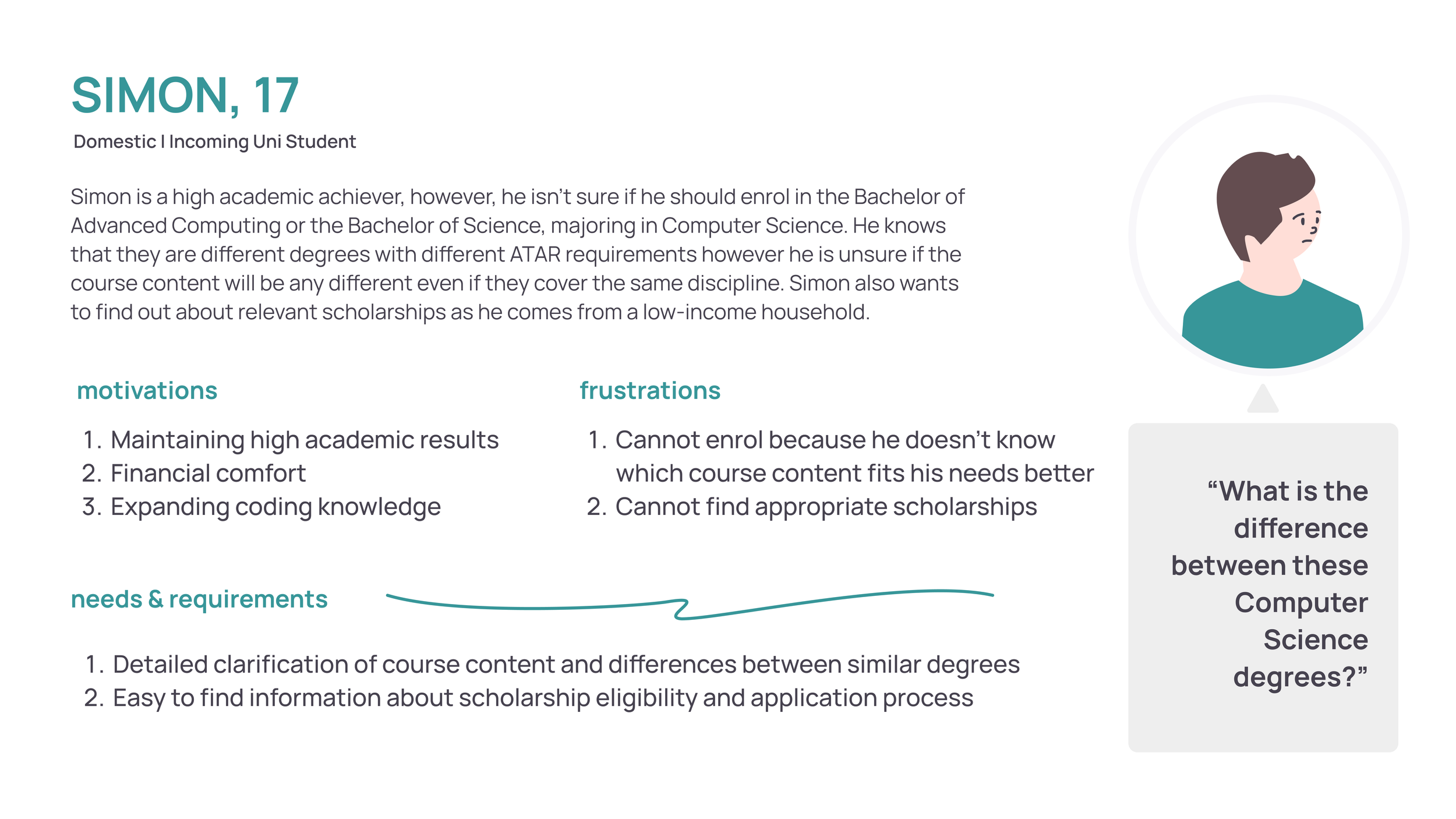
Simon
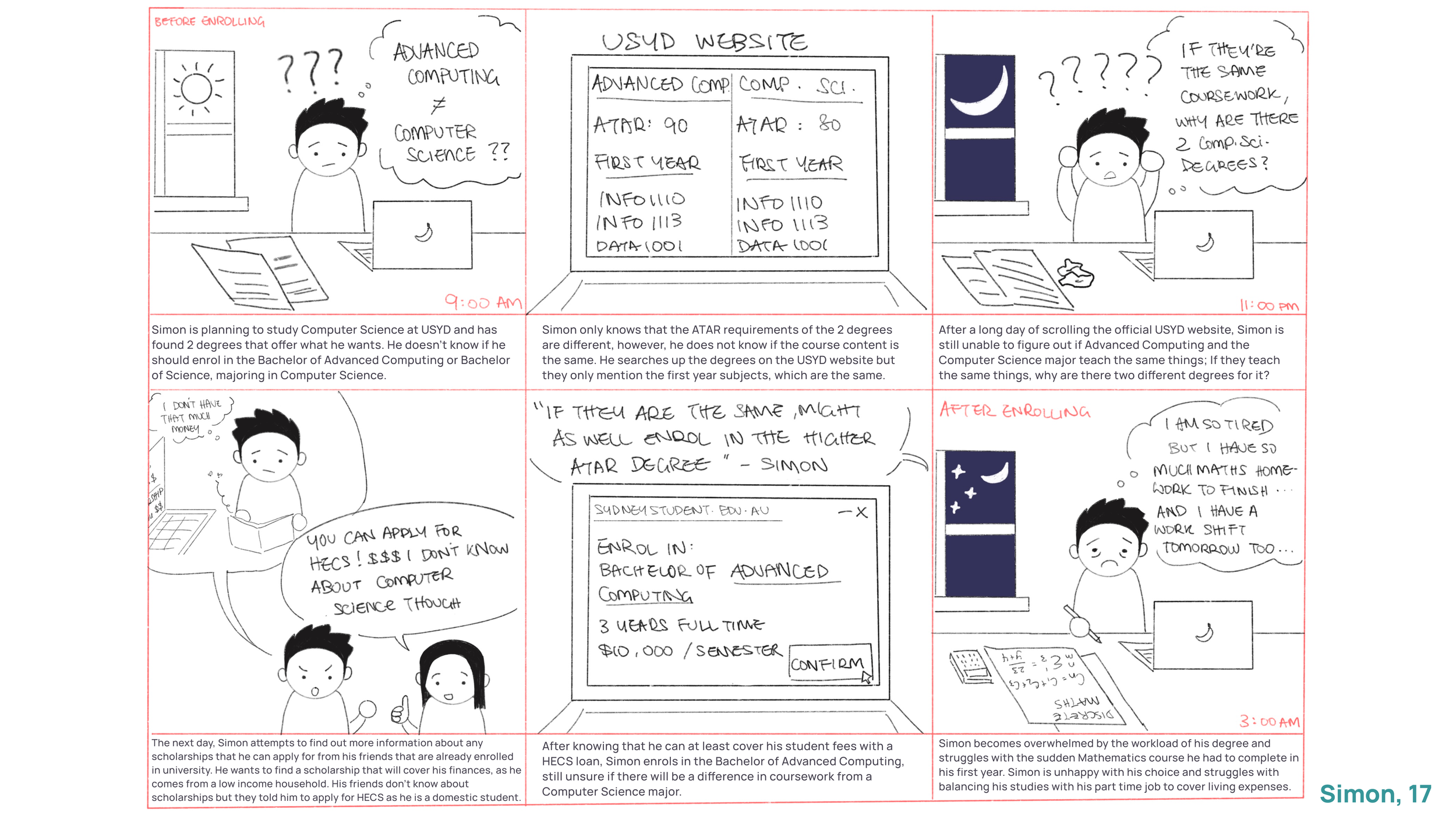
Simon's Storyboard
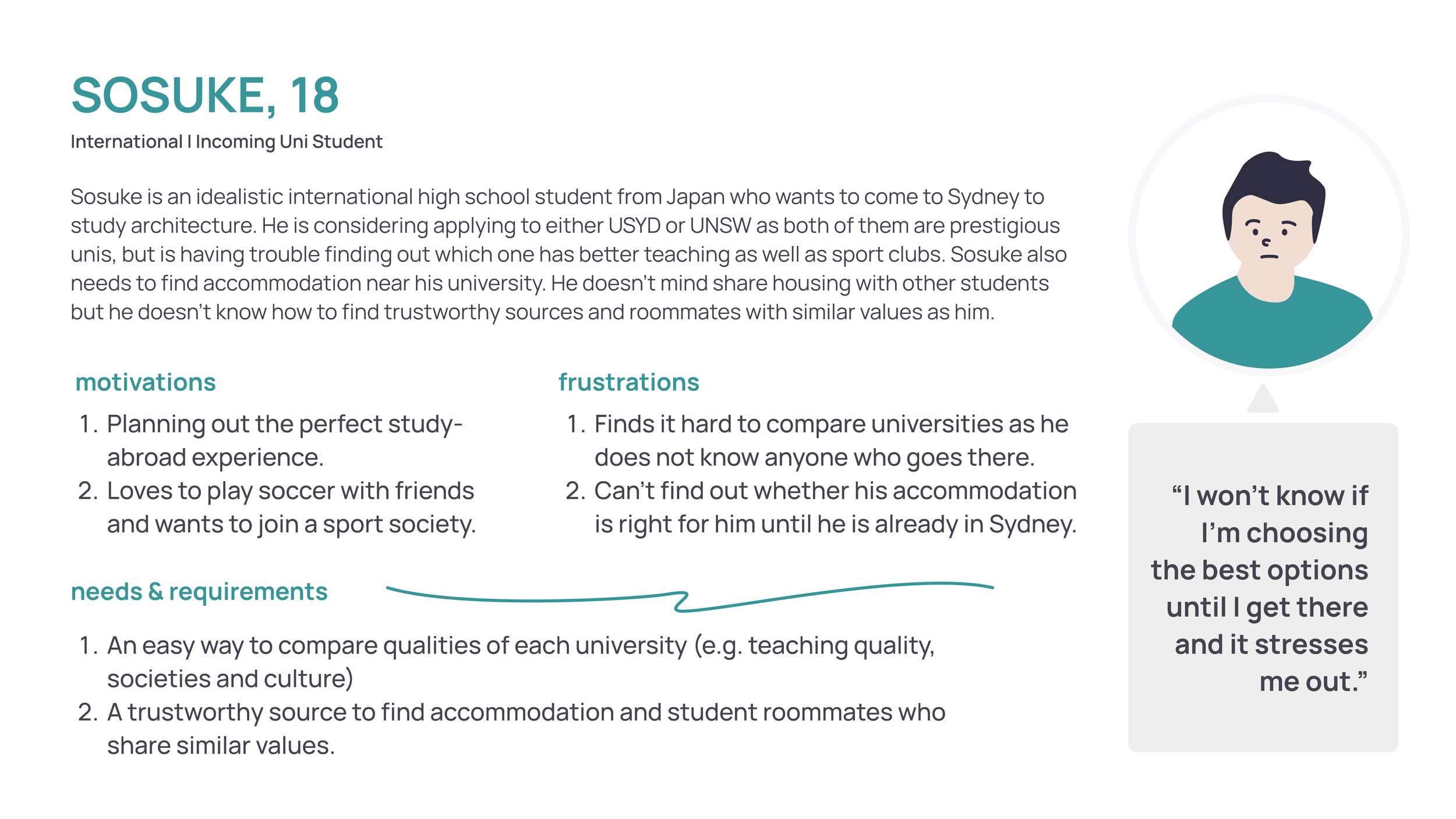
Sosuke
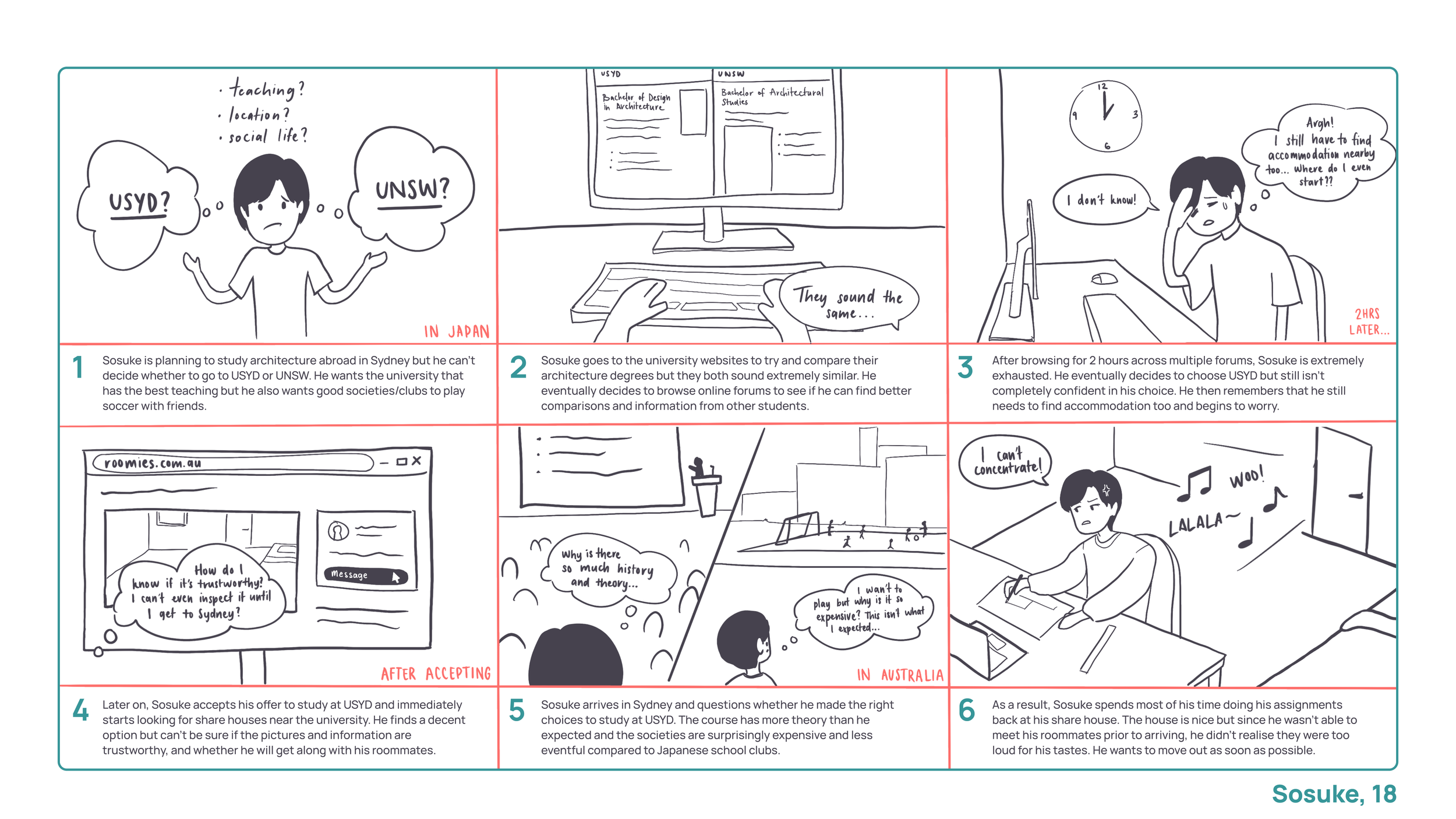
Sosuke's Storyboard
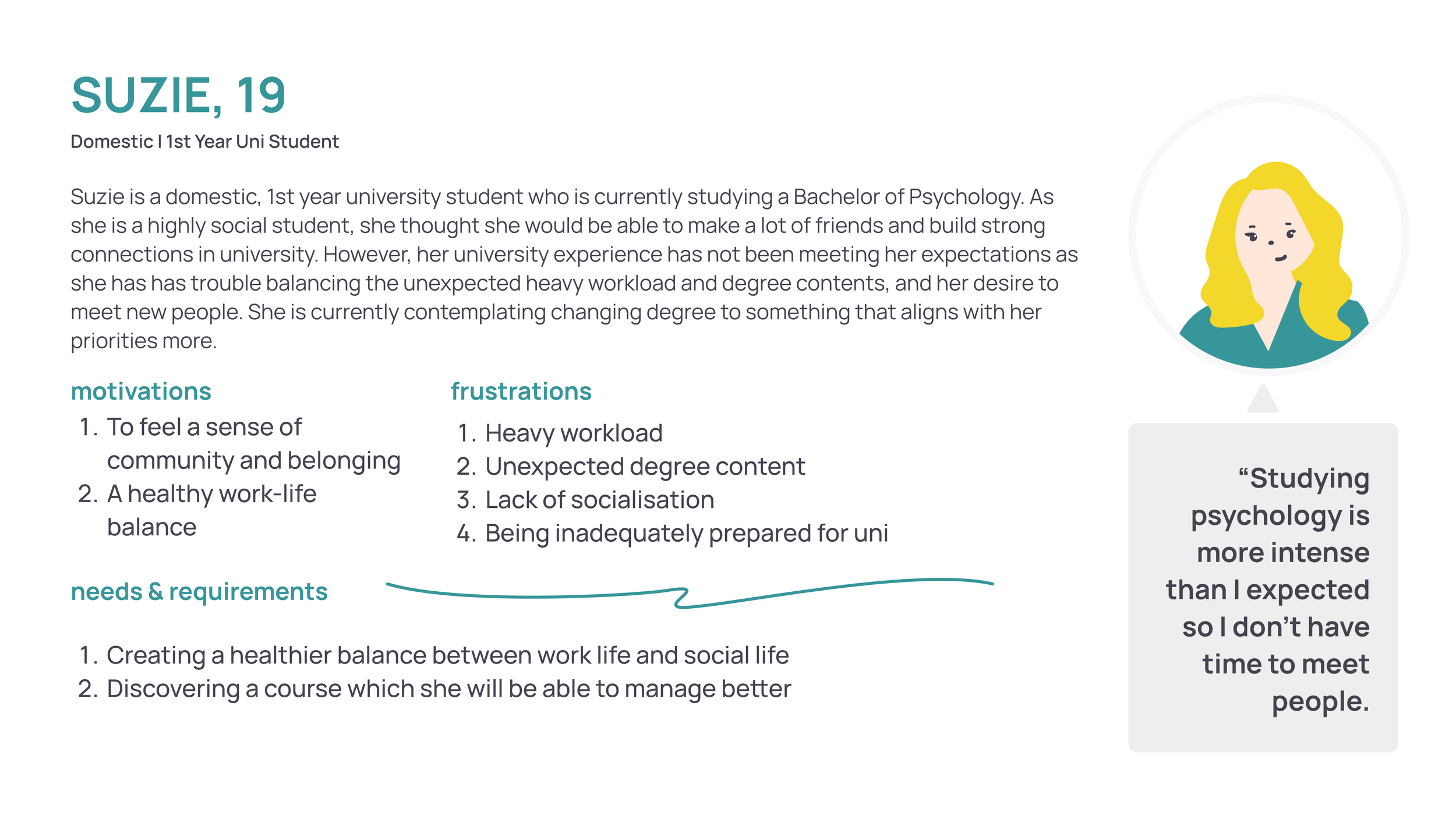
Suzie
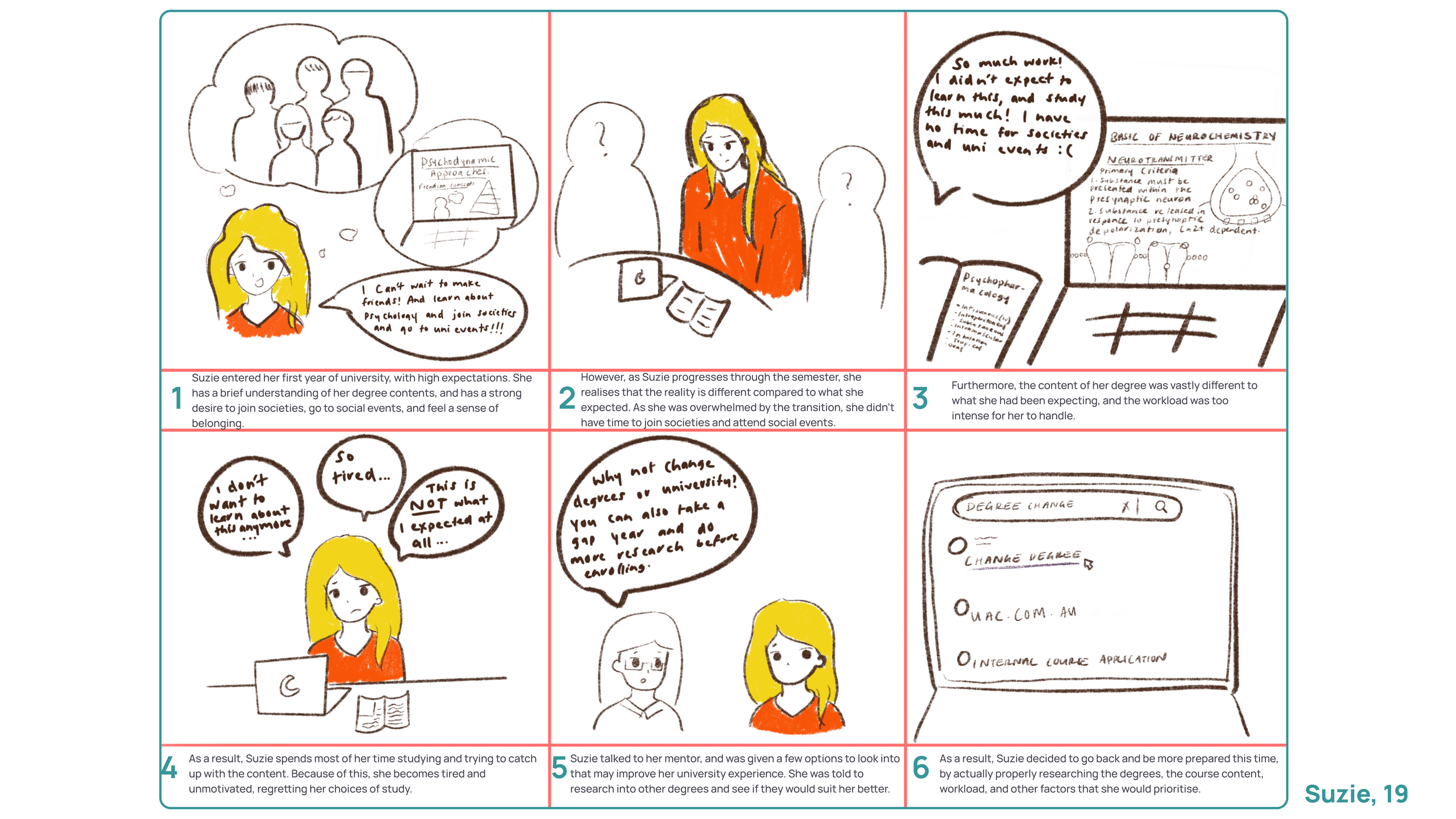
Suzie's Storyboard
Key insights
Insight 1 | Students are more inclined to reach out to their own networks for advice about the university, as university-provided sources were not sufficient.
Insight 2 | Universities do not provide adequate resources for students to prepare for university.
Insight 3 | Students struggle to adjust to the increased academic expectations of university life after high school.
Insight 4 | Students deviate from intended study plans due to their expectations not being met.
Insight 5 | Students desire a sociable environment to build and maintain connections in the university.
Based on primary research, the initial problem statement was validated and refined to better align with the needs of our user base, ensuring a more tailored and effective foundation for designing the solution.
Refined problem statement:
A large number of students do not end up completing their original degree due to the disparity between expectations and reality, leaving students overwhelmed by the transition from high school to university.
Students need a centralised, accessible and accurate source of information to better help them make informed decisions about their academic pursuits.

Ideation Methods
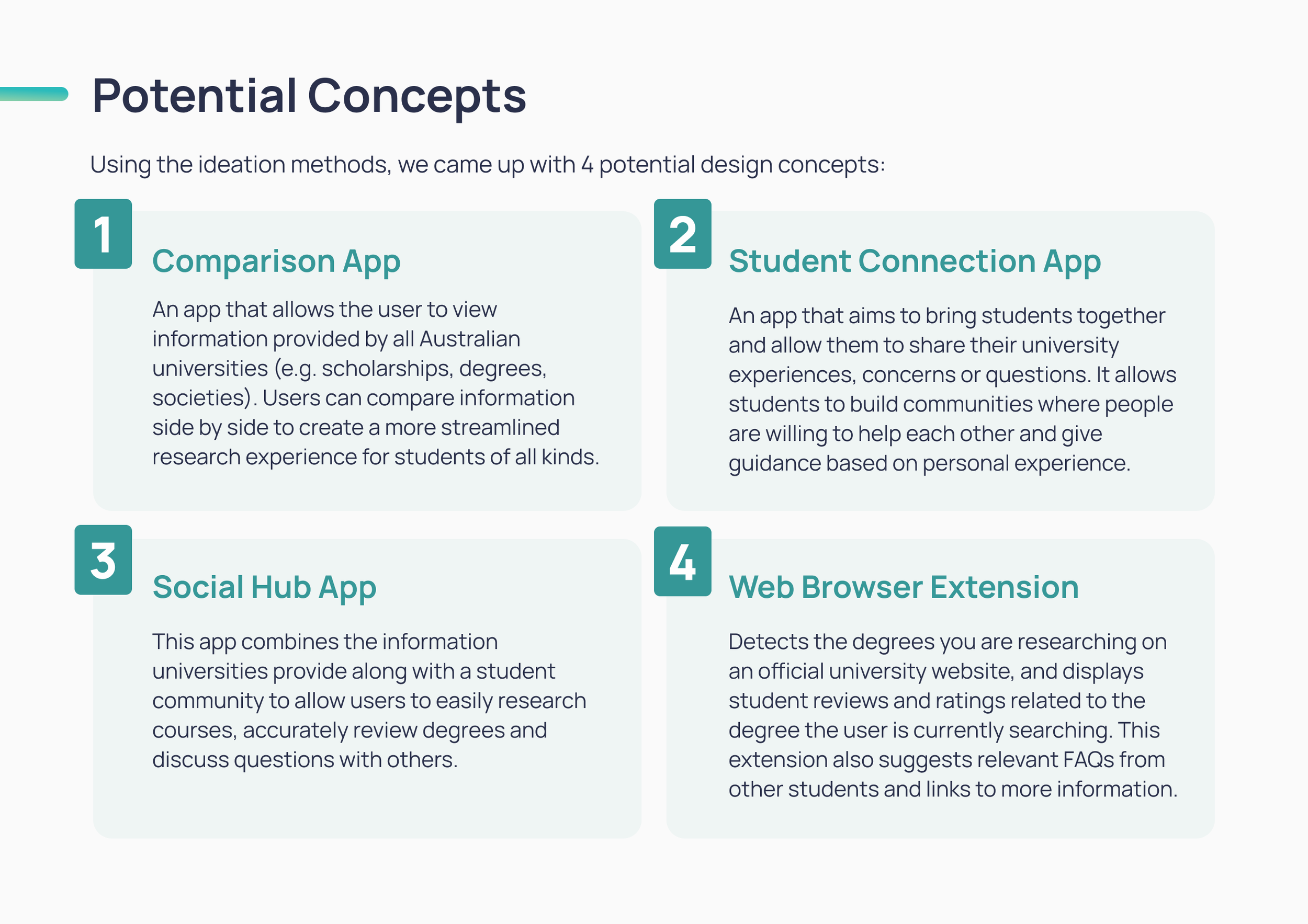
Potential Concepts
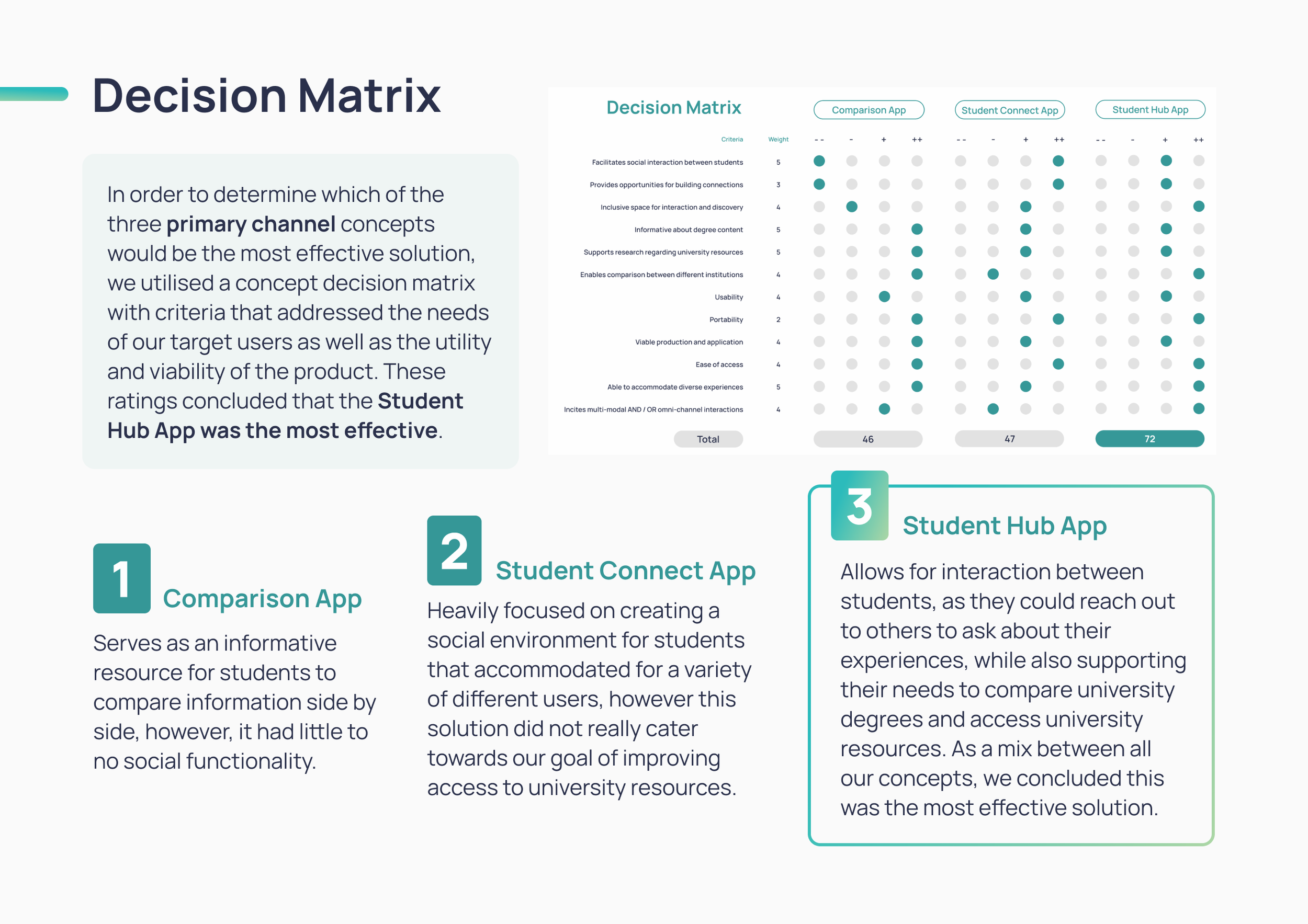
Decision Matrix
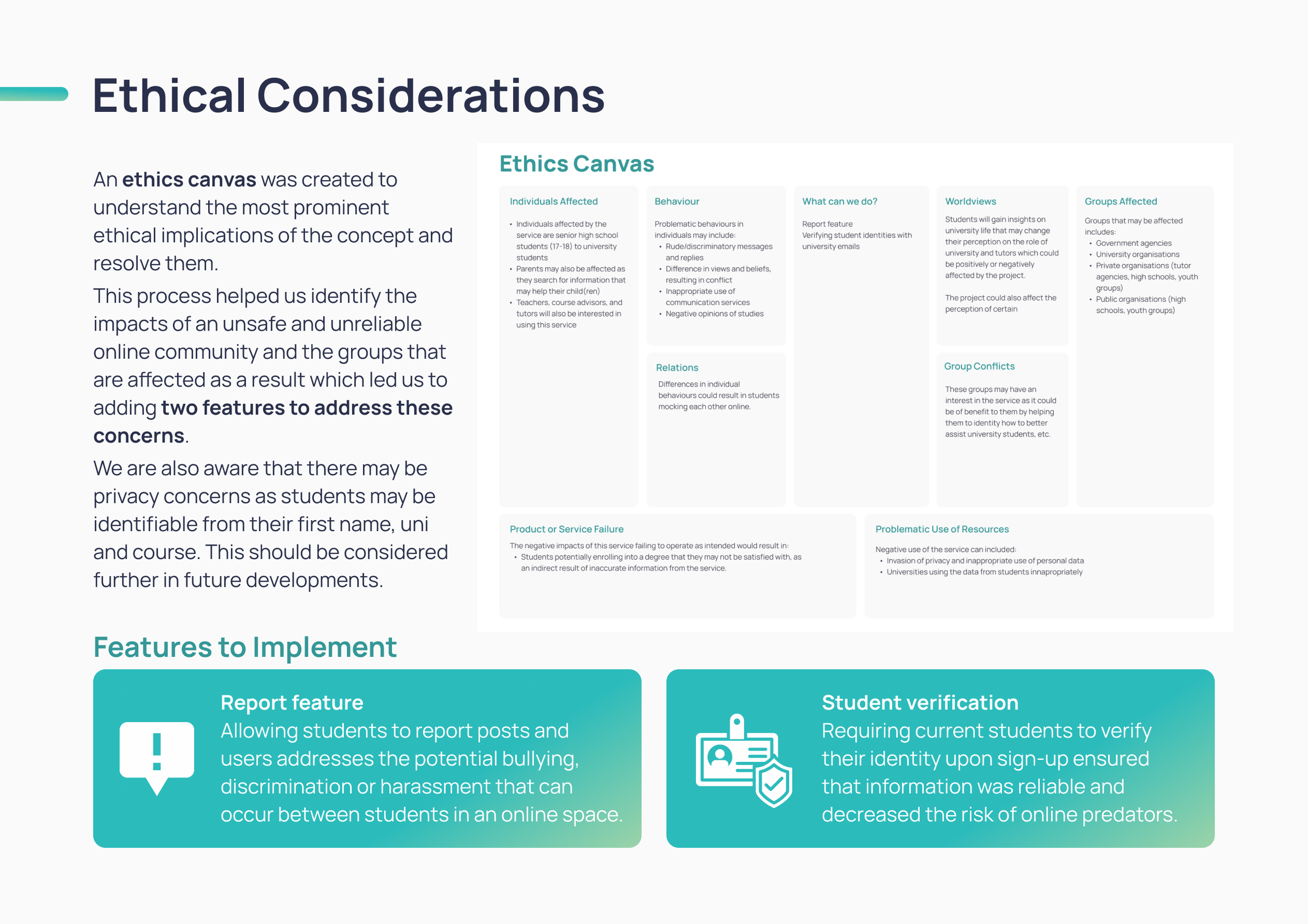
Ethical Considerations
Mobile app iteration

Key Design Contributions
Led the design of the browser extension experience to complement the mobile app and support contextual course exploration.
Challenge | Students frequently switched between university websites and external sources when researching courses, creating fragmented information-seeking experiences.
Decision | Designed browser extension functionality that surfaced peer reviews, FAQs, and course comparison tools directly within university websites, extending the mobile app experience into students' existing browsing workflows while maintaining consistency across touchpoints.
Outcome | The design enabled students to access trusted information without interrupting their existing browsing flow.
Concept sketches to mid-fidelity wireframes

Mock ups refinement
Web extension iteration
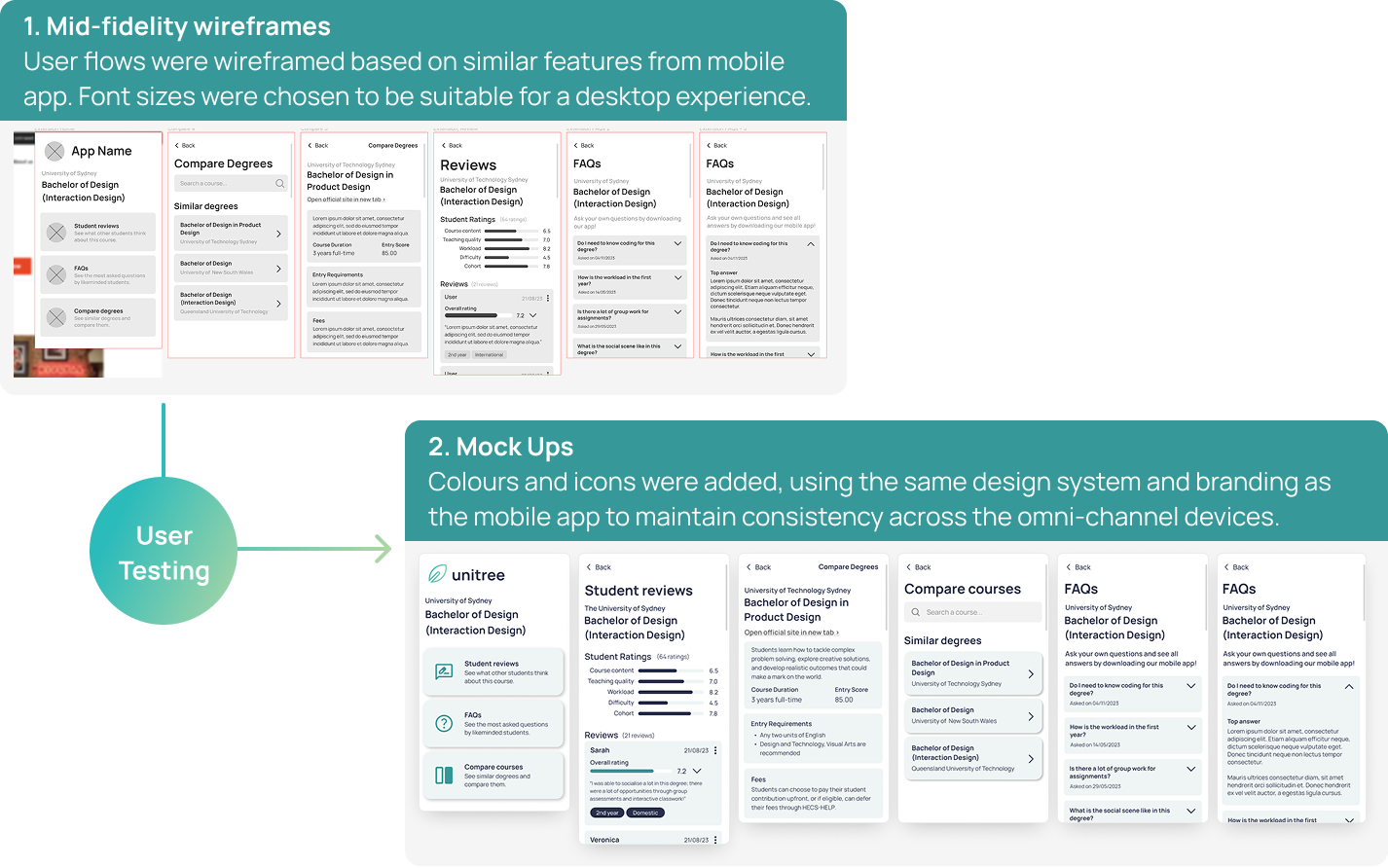

Wireframes to Prototypes
Key Design Contributions
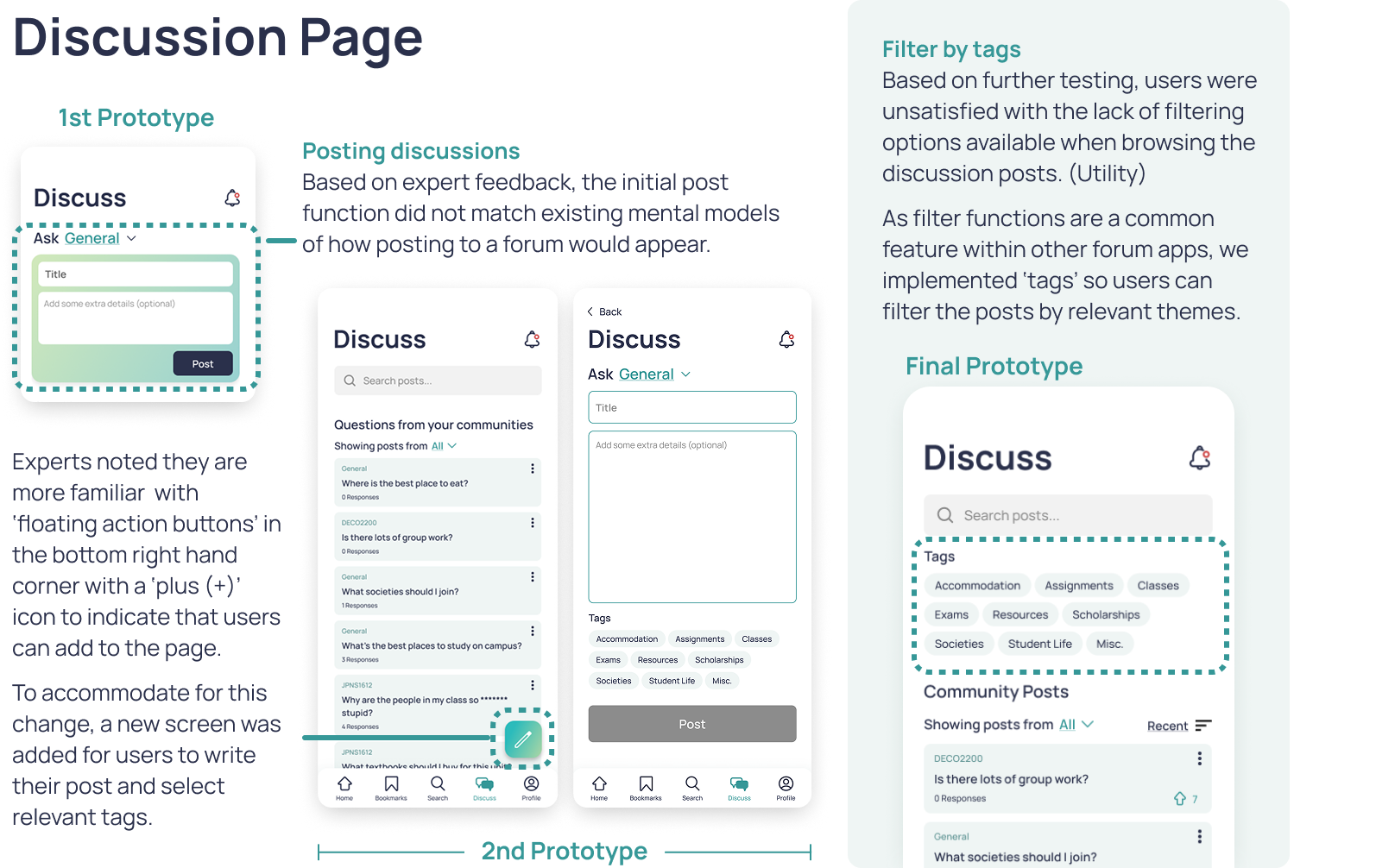
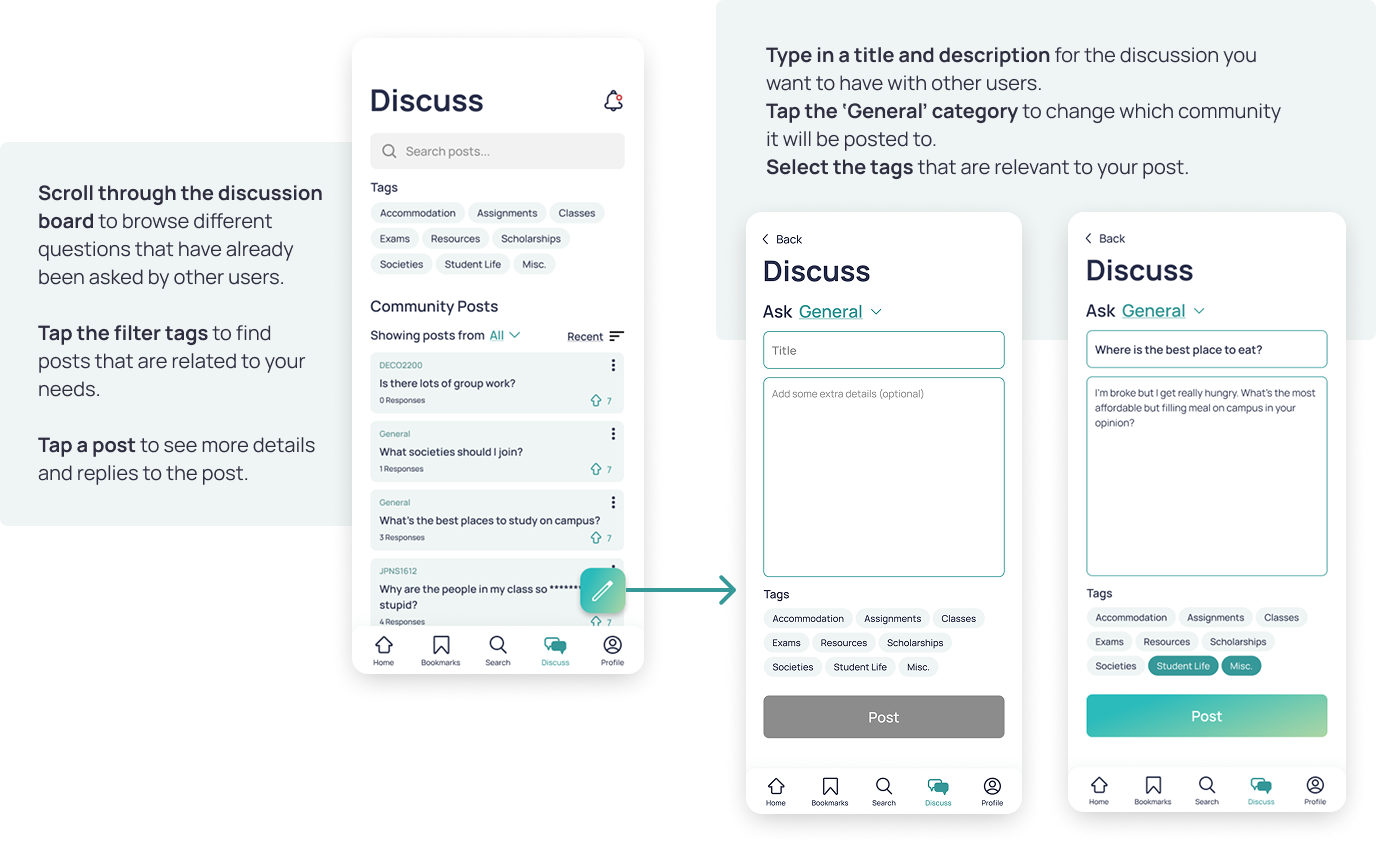
Owned the evolution of the discussion experience across multiple iterations, introducing familiar interaction patterns and improving content discovery to create a more intuitive community platform.
Challenge | Initial testing showed that the discussion feature lacked familiar interaction patterns, making it difficult for users to create posts and browse relevant content efficiently.
Decision | I owned the evolution of the discussion experience across multiple iterations. Based on expert feedback and utility heuristics, I redesigned the posting flow, introduced a floating action button for content creation, and implemented tag-based filtering to support content discovery and align with established forum conventions.
Outcome | The final experience provided a more intuitive and scalable discussion platform, improving content organisation and helping students quickly surface conversations relevant to their needs.
Final Prototype Overview


