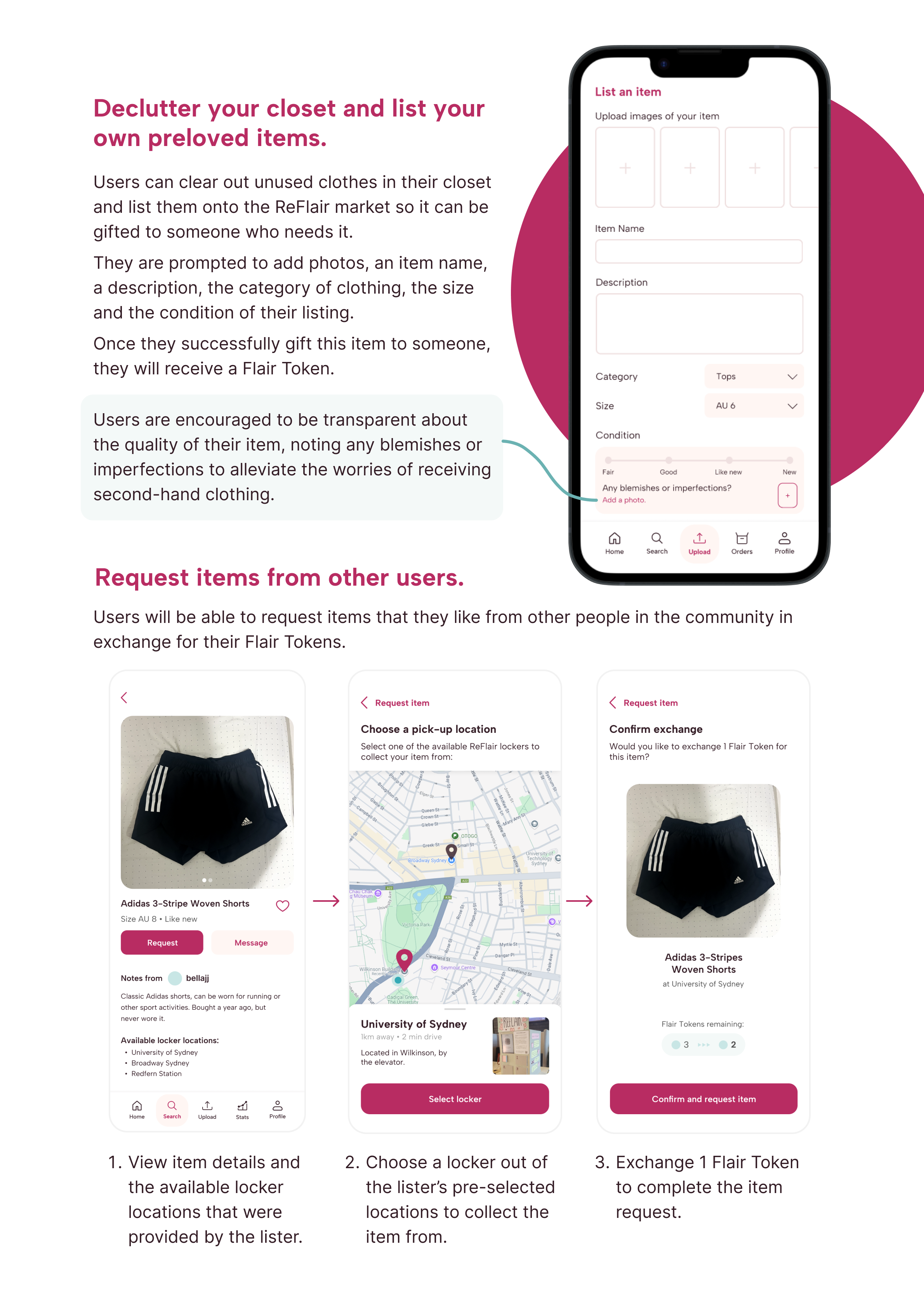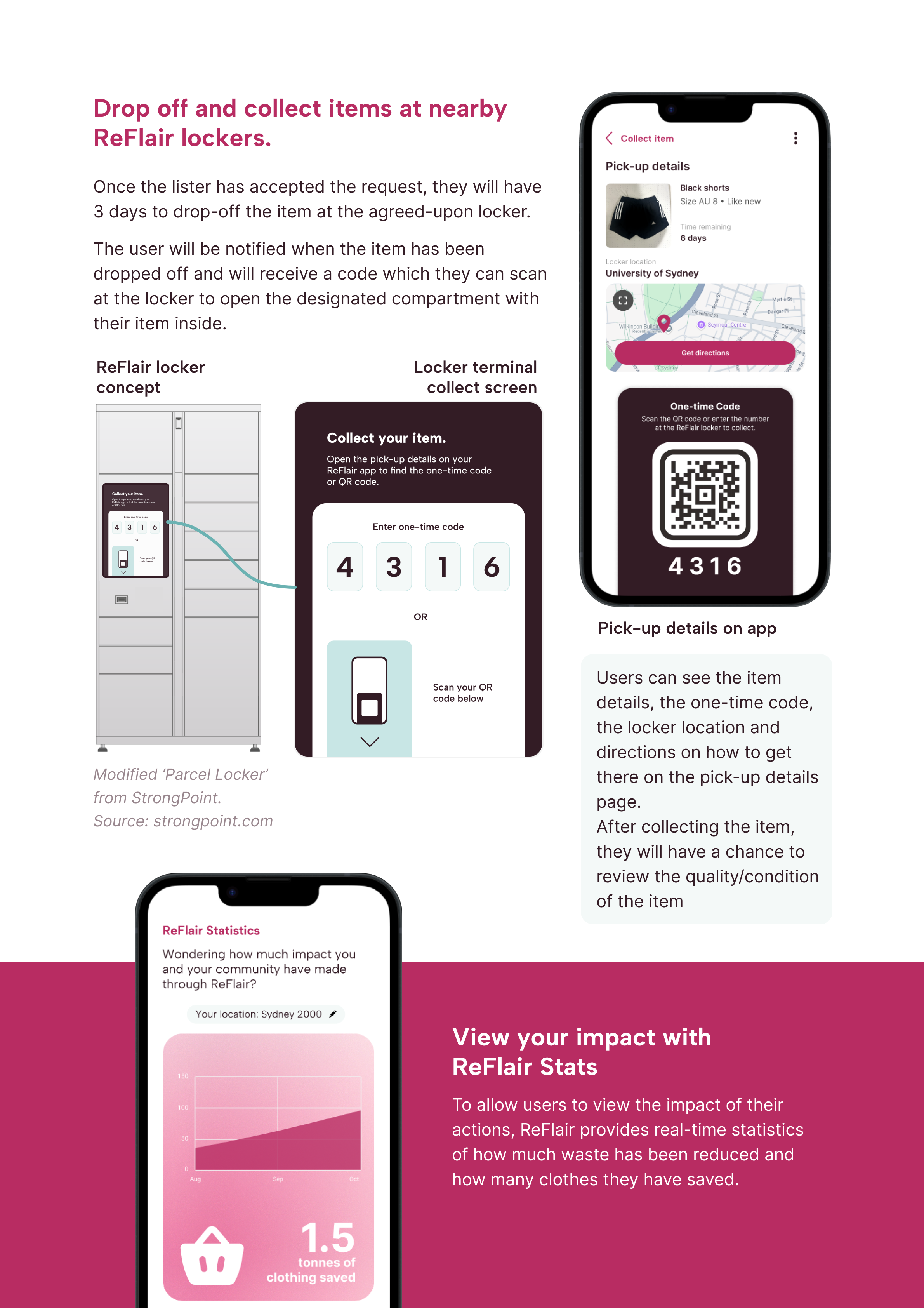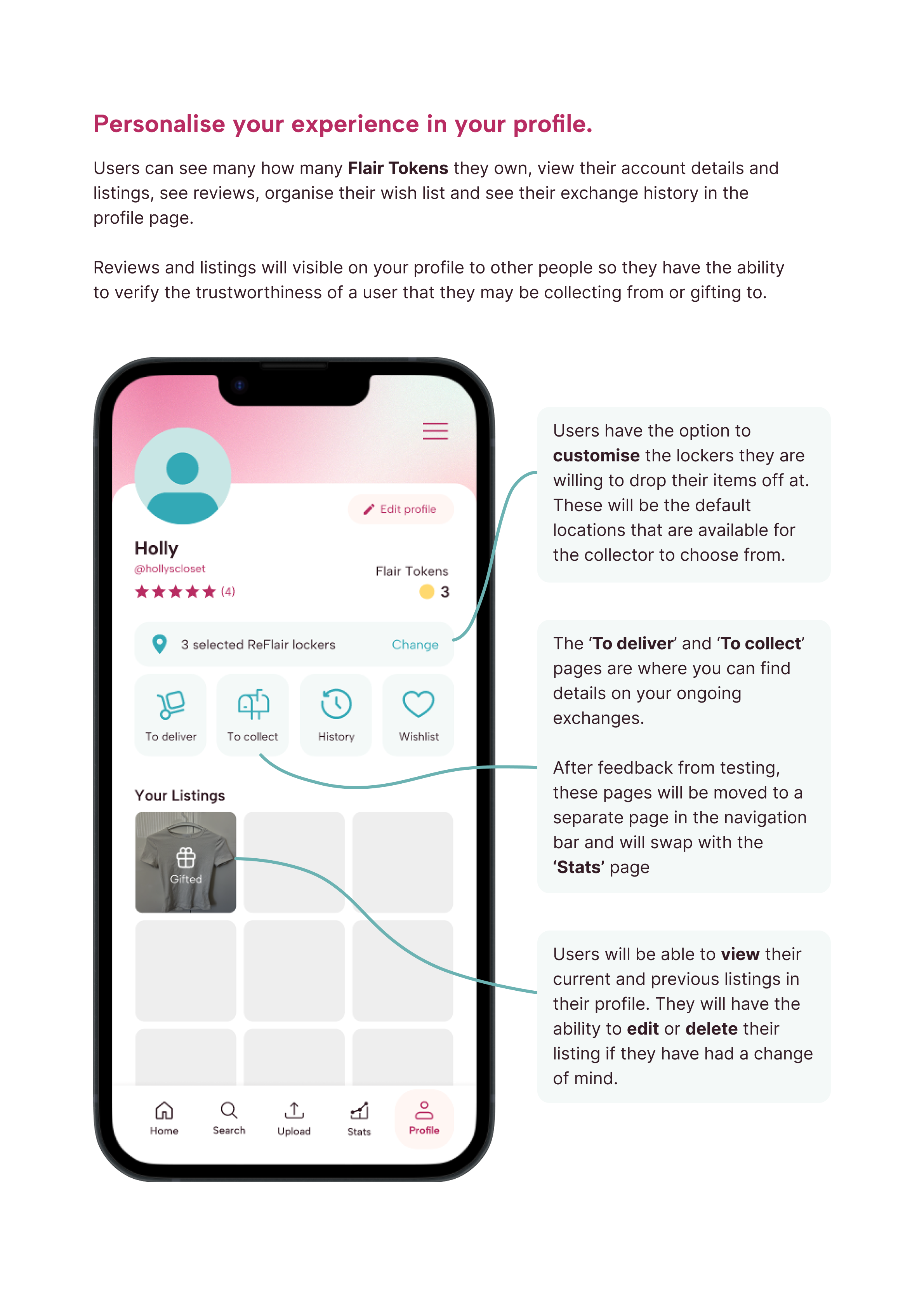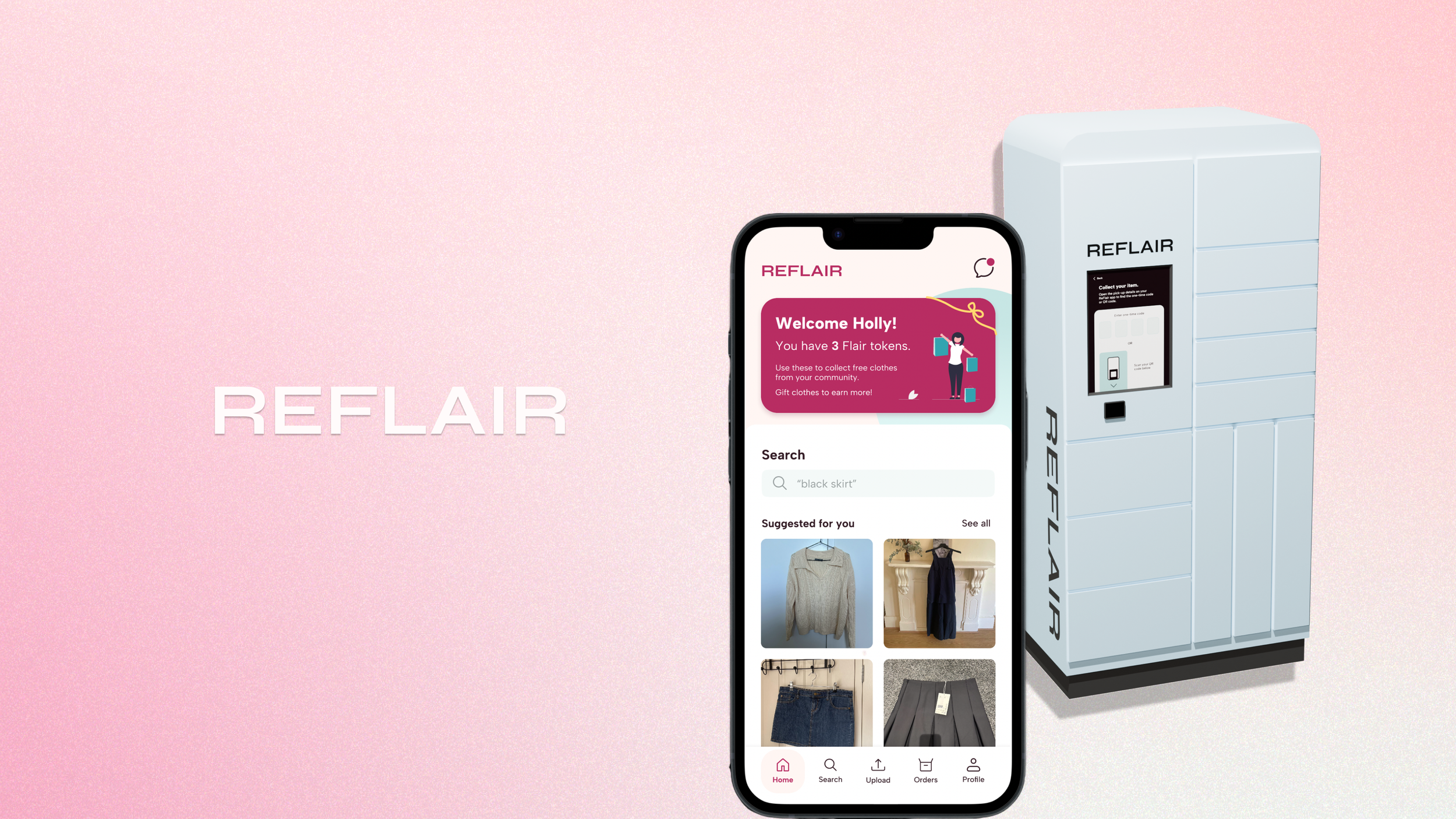
Final solution | Prototype Experience

Leading the research and helping shape the service ecosystem, this project explored how sustainable fashion practices could be made more accessible through a community-driven clothing exchange platform. By combining digital and physical touchpoints, ReFlair introduced a mobile platform and locker ecosystem that enabled people to exchange pre-loved clothing conveniently, reducing barriers to participation and encouraging more sustainable consumption habits.
August - November
Research • Service Design • Product Design
Figma • Blender
Key contributions
Research Leadership | Defined and reframed the problem space through mixed-method research involving questionnaires, online ethnography, and semi-structured interviews.
Insight Synthesis & Experience Strategy | Translated findings into opportunities through affinity mapping, personas, journey maps, storyboards, and concept evaluation to guide the final solution.
Physical Service Design | Led the exploration and prototyping of the locker ecosystem, translating digital interactions into tangible service touchpoints and testing how both experiences could work together.
UX/UI Design & Prototyping | Collaborated on iterative prototyping and interface refinement informed by guerrilla testing and usability feedback.
Communication & Storytelling | Planned, recorded, and produced a walkthrough video illustrating how digital and physical touchpoints came together within the ReFlair ecosystem.
Problem Area
Context
Aligned with Sustainable Development Goal 12 (SDG 12), ReFlair explored how more sustainable consumption habits could be encouraged within the fashion industry.
Despite growing awareness, convenience, affordability, and accessibility continue to make fast fashion the easier choice, creating a gap between consumers' intentions and their actual behaviours.
Research
To better understand the barriers preventing consumers from adopting sustainable fashion practices, I led a mixed-method research approach combining:
110 questionnaire responses
25 online ethnographic entries
12 semi-structured interviews
This triangulated approach provided both quantitative and qualitative perspectives into consumer attitudes, behaviours, and barriers to adoption.
Research Synthesis
Using affinity mapping, the findings were synthesised into five key themes that informed subsequent design decisions.
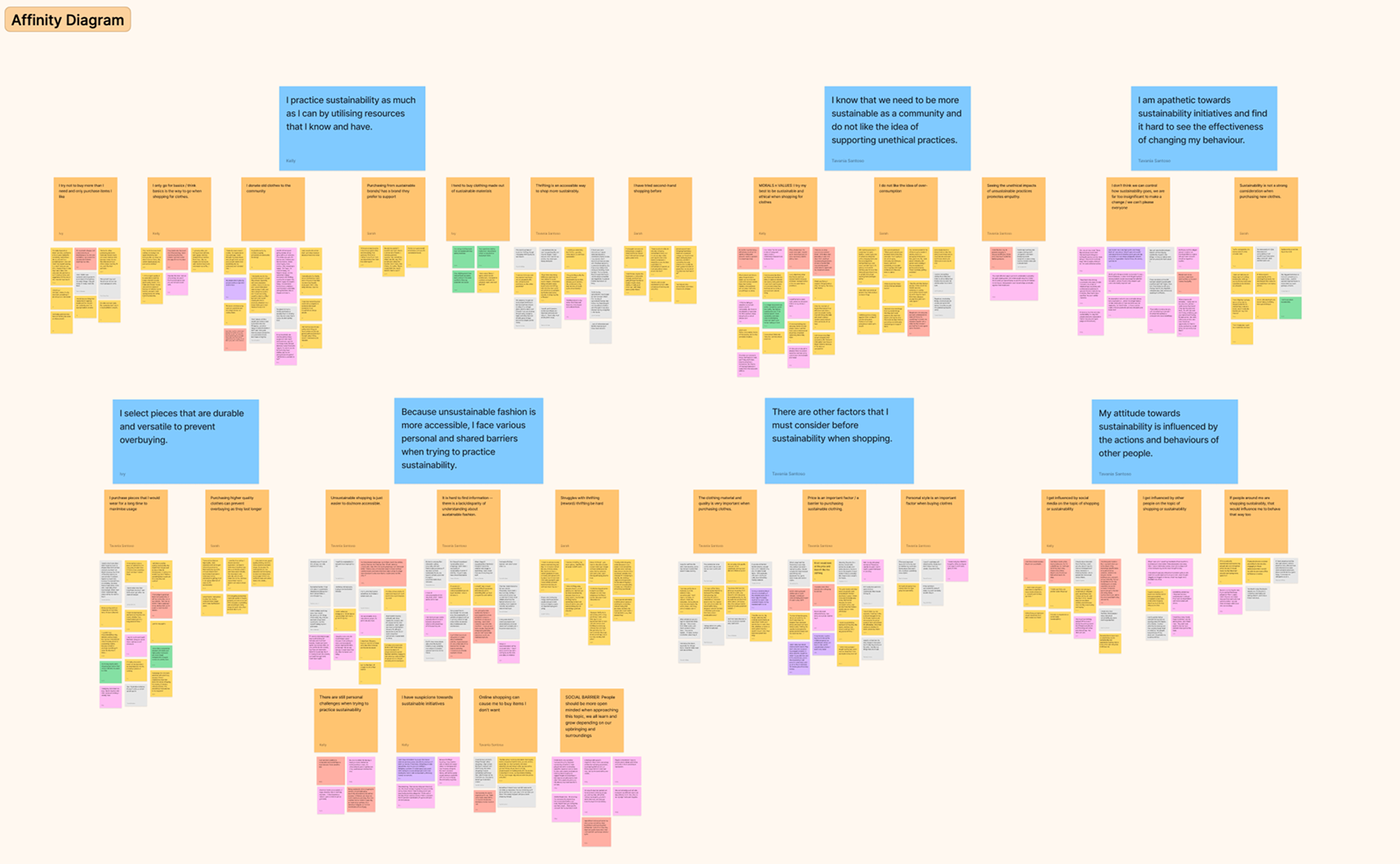
Key insights
Insight 1 | Awareness doesn't translate into action. Consumers understand sustainability, but efforts are often limited to initiatives that are convenient and familiar.
Insight 2 | Personal impact feels too distant. Many participants struggled to see how individual behaviours could create meaningful change.
Insight 3 | Accessibility remains a major barrier. Fast fashion is more convenient and accessible than sustainable alternatives.
Insight 4 | Purchasing decisions prioritise practicality. Price, availability, and personal style often outweigh sustainability considerations.
Insight 5 | Social influence shapes behaviour. Friends, communities, and social media strongly affect consumption habits.
Based on primary research, the problem statement was validated and refined to better align with the needs of our user base, ensuring a more tailored and effective foundation for designing the solution.
People have differing levels of knowledge regarding slow, sustainable fashion but are reluctant to invest time into finding responsible options. This leads to overconsumption of unsustainable products, encouraging businesses to continue unethical practices, creating a cycle that's hard to break without real, actionable solutions.
Personas & Journey Mapping
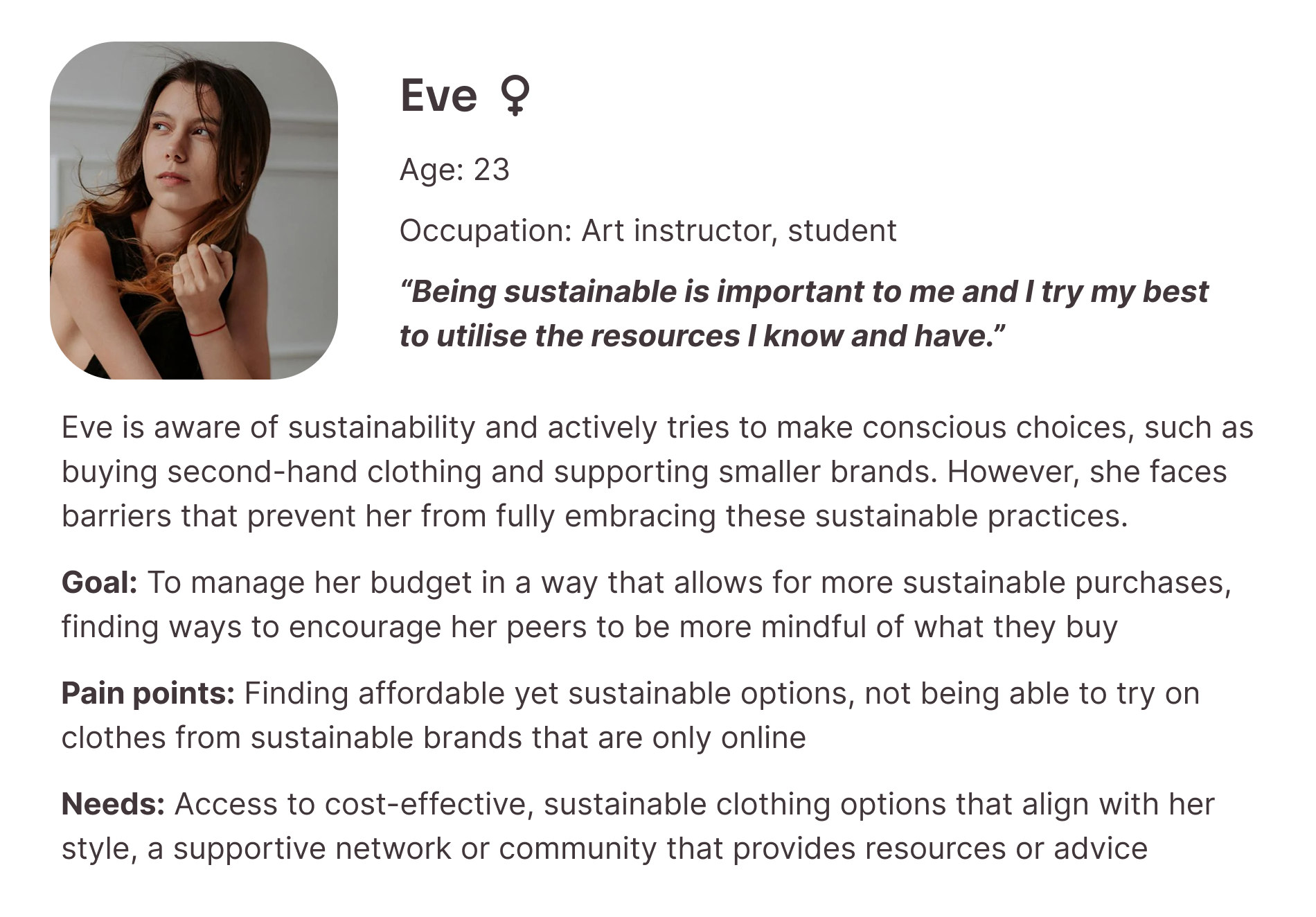
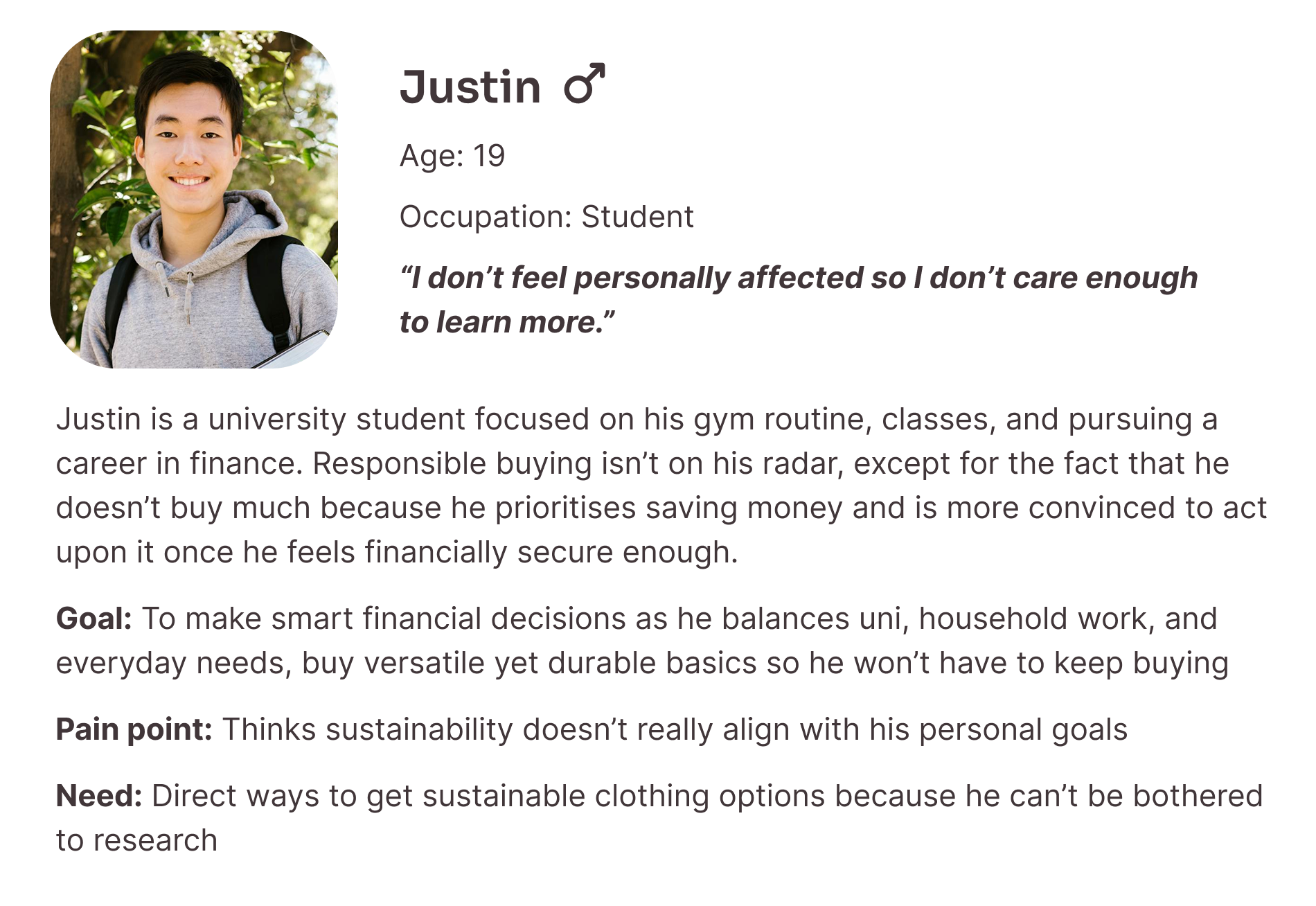
After synthesising the research findings, I developed three personas and corresponding journey maps to represent different attitudes and behaviours towards sustainable fashion.
While the solution needed to address multiple user groups, Holly's experience became the primary lens for concept development and evaluation.
(Gallery containing 3 personas + journey map)

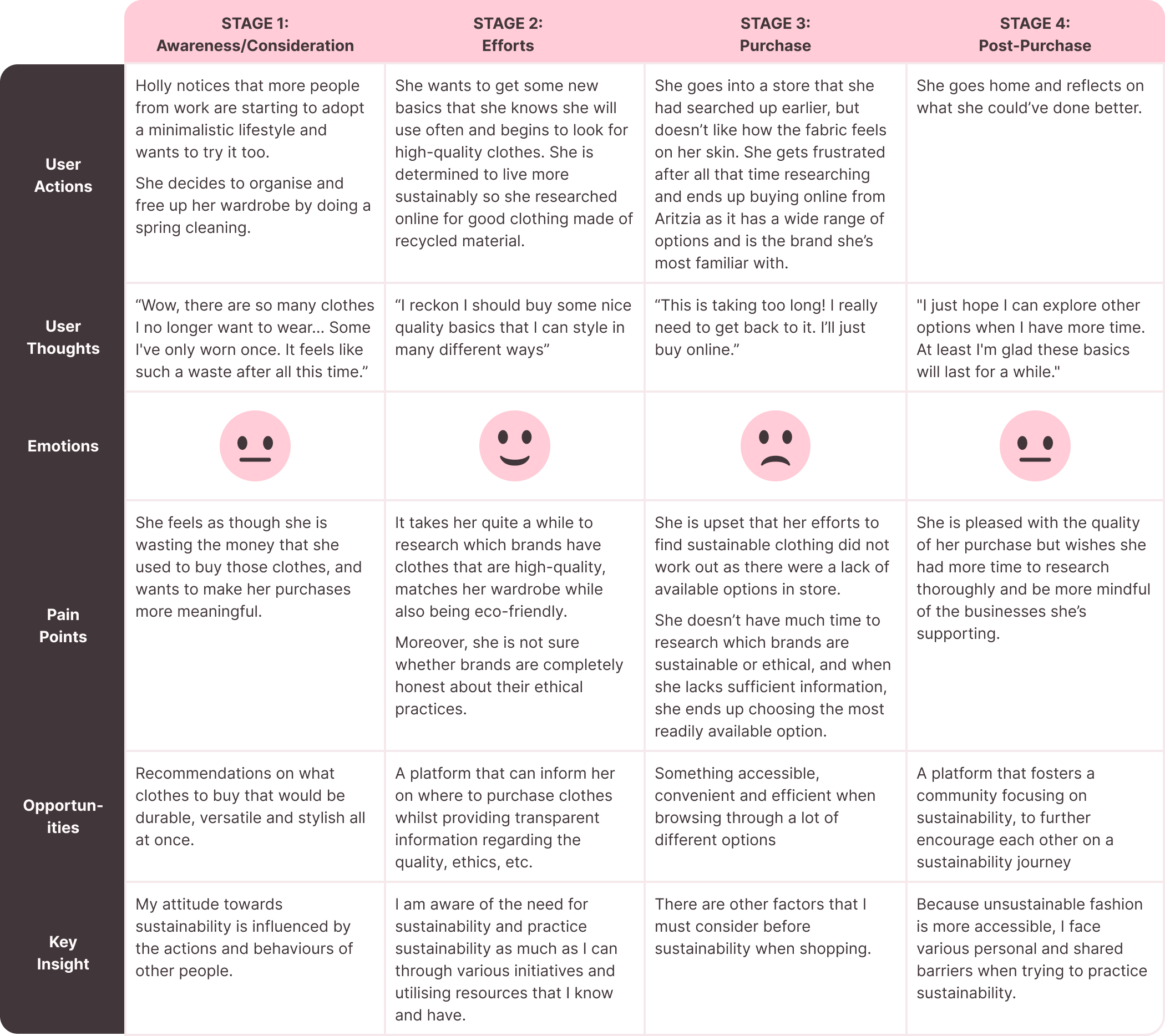
User Journey Map
Ideation
Building on the research findings, we explored multiple concepts through Crazy 8's, storyboards, and concept sketches. Concepts were evaluated against user needs, feasibility, and their ability to address key barriers identified during research.
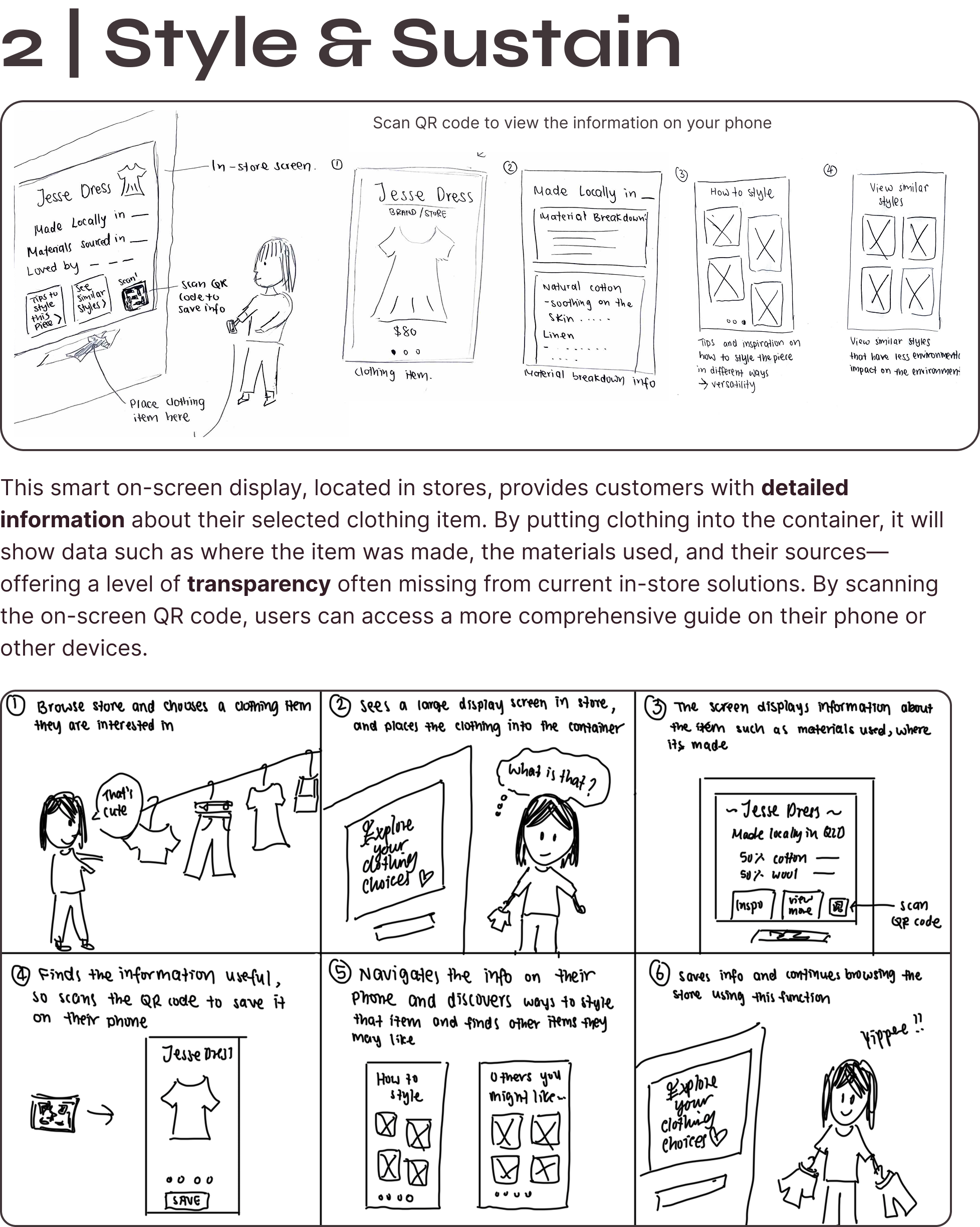
Using a decision matrix, we refined several directions before selecting ReFlair - a community-driven ecosystem that combined digital and physical touchpoints to make sustainable fashion more accessible.
(Carousel: Decision Matrix → Other concept sketches → ReFlair)




Why ReFlair?
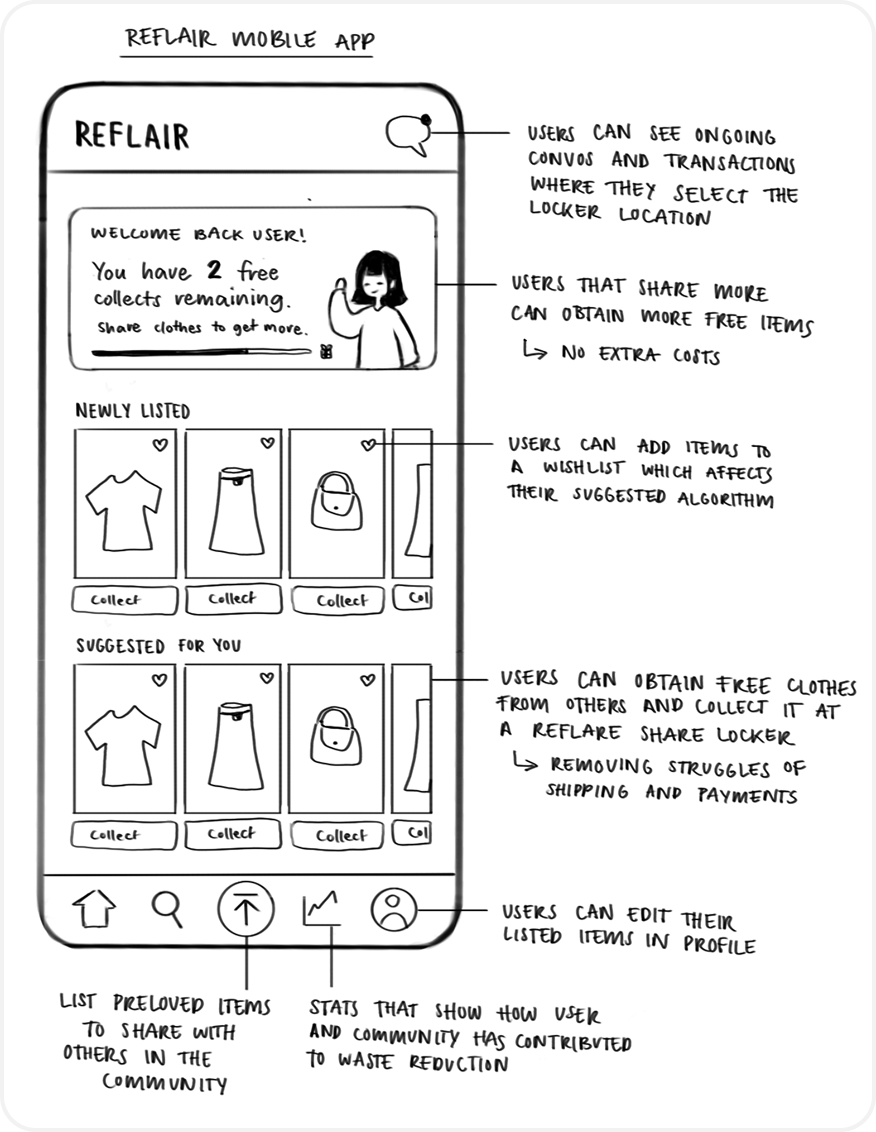

After exploring several concepts, ReFlair was selected because it addressed both behavioural and practical barriers uncovered during research.
Rather than relying solely on education, ReFlair combined a mobile platform with physical lockers to create a convenient and community-driven ecosystem that encouraged reuse through familiar behaviours and accessible touchpoints.
Starting with sketches and low-fidelity wireframes, we iteratively refined both the digital and physical experiences through guerrilla testing, usability evaluations, and continuous feedback. The evolution from concept sketches to high-fidelity prototypes helped align the ecosystem with users' mental models while improving clarity, trust, and interaction flow.
User Testing & Key Learnings
User Testing
We conducted usability testing with 7 participants across collector and gifter scenarios using think-aloud protocols and scenario-based tasks. Feedback sessions, heuristic evaluations and affinity mapping were used to identify usability issues and prioritise improvements.
Methods
Think-aloud testing
SUS survey (80 average score)
Heuristic evaluations
Affinity mapping
Key Learnings
Navigation & Discoverability | Users struggled to locate key actions and understand page hierarchy, revealing opportunities to improve visual hierarchy and navigation clarity.
Trust & Transparency | Participants expressed concerns around locker security and profile credibility, highlighting the importance of stronger feedback cues and trust-building mechanisms.
Mental Models & Clarity | Several interactions and terms did not align with users' expectations, creating confusion around Flair Tokens, listing items and locker interactions.
Key Design Contributions
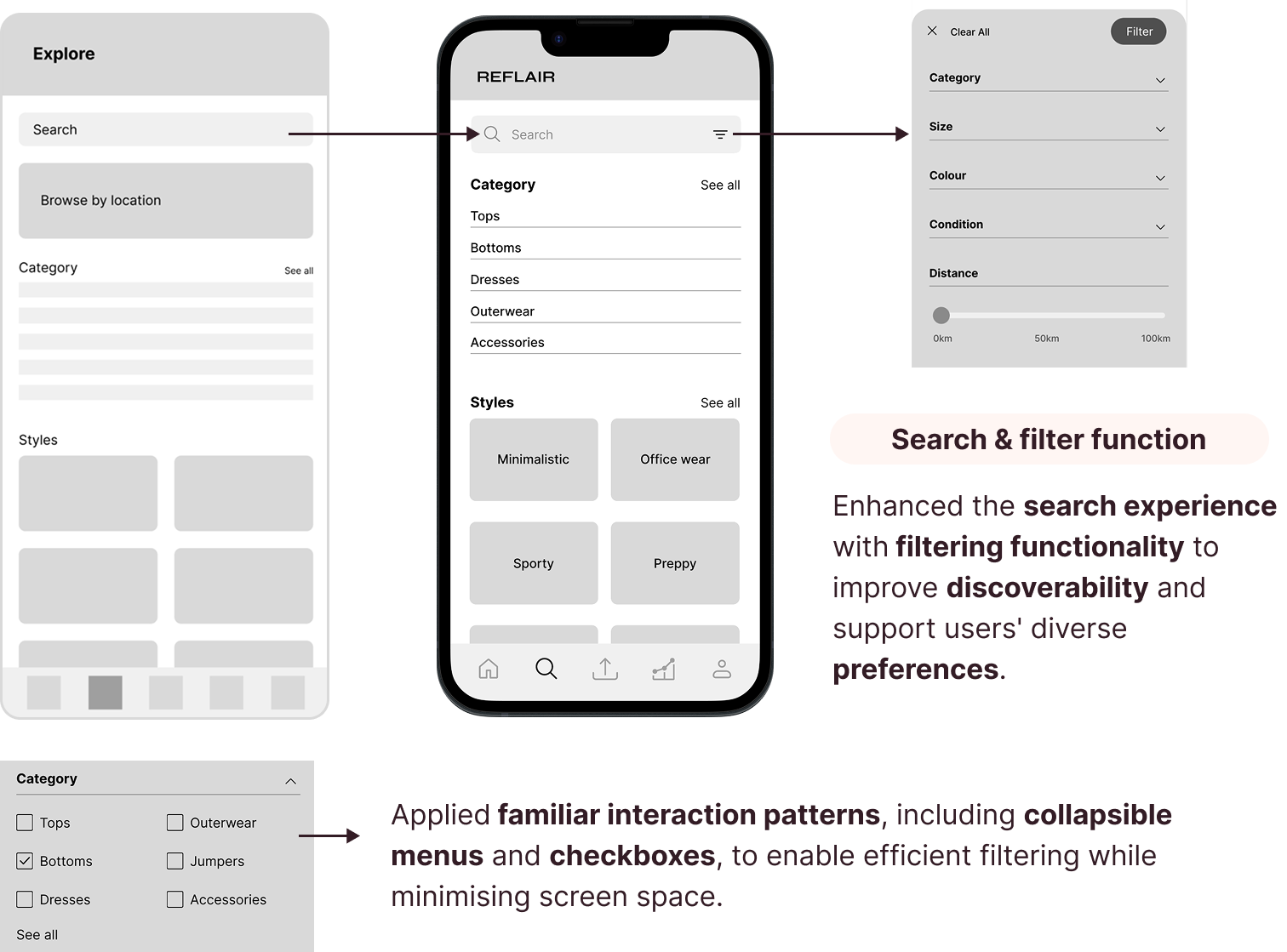
Led the redesign of the search and filtering experience to improve discoverability and support more efficient browsing.
Challenge | Users overlooked the filter function and were overwhelmed by multiple entry points, making it difficult to refine their searches.
Decision |
Introduced a dedicated filter experience using familiar interaction patterns.
Reduced visual clutter and competing category suggestions.
Improved information hierarchy to support more targeted searching.
Outcome | Delivered a clearer and more focused browsing experience, helping users find relevant items more efficiently.
Key Design Contributions
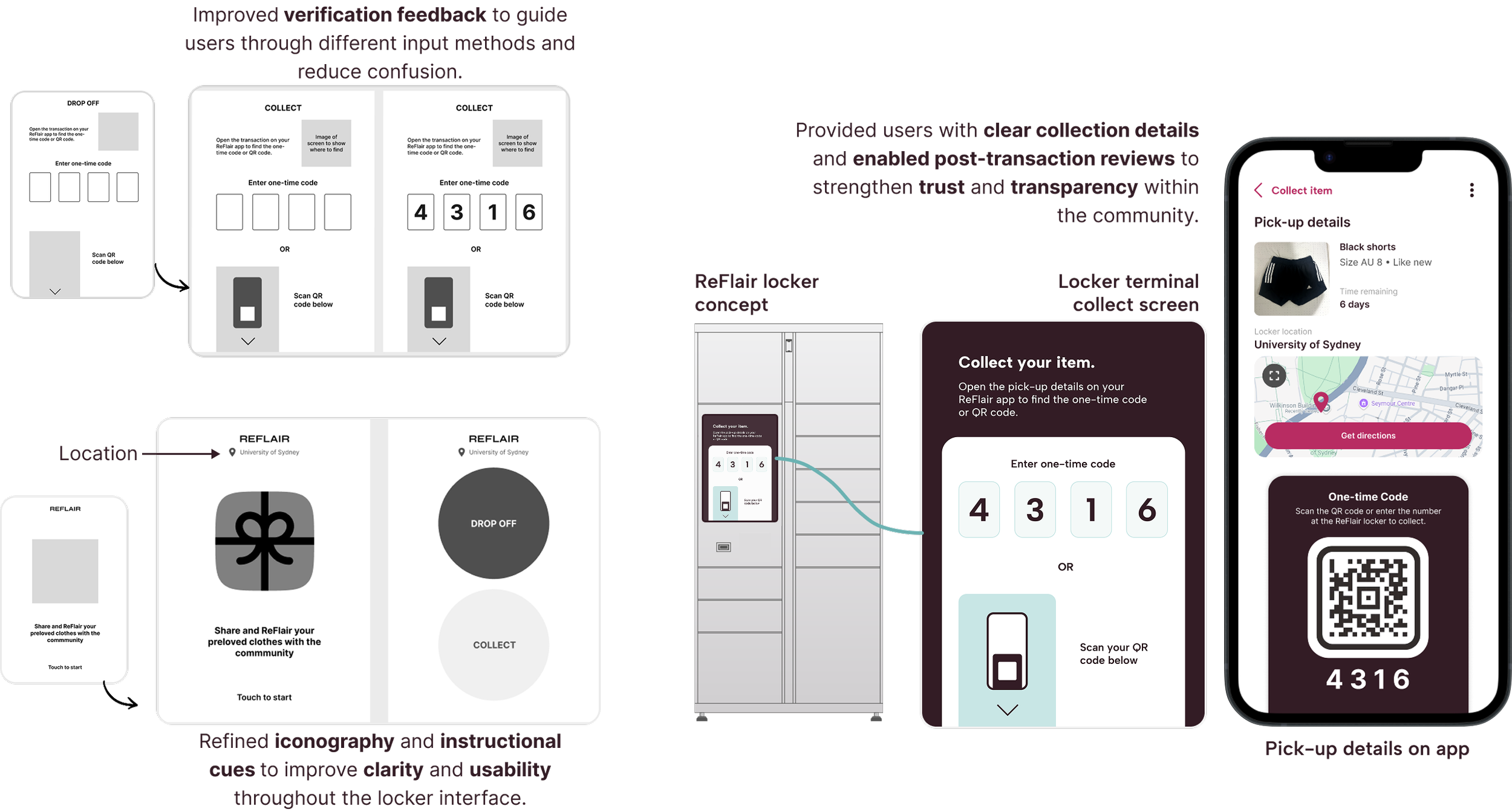
Led the exploration and prototyping of the locker experience, extending ReFlair beyond the mobile app to create a cohesive end-to-end service ecosystem.
Mid-Fidelity Wireframes
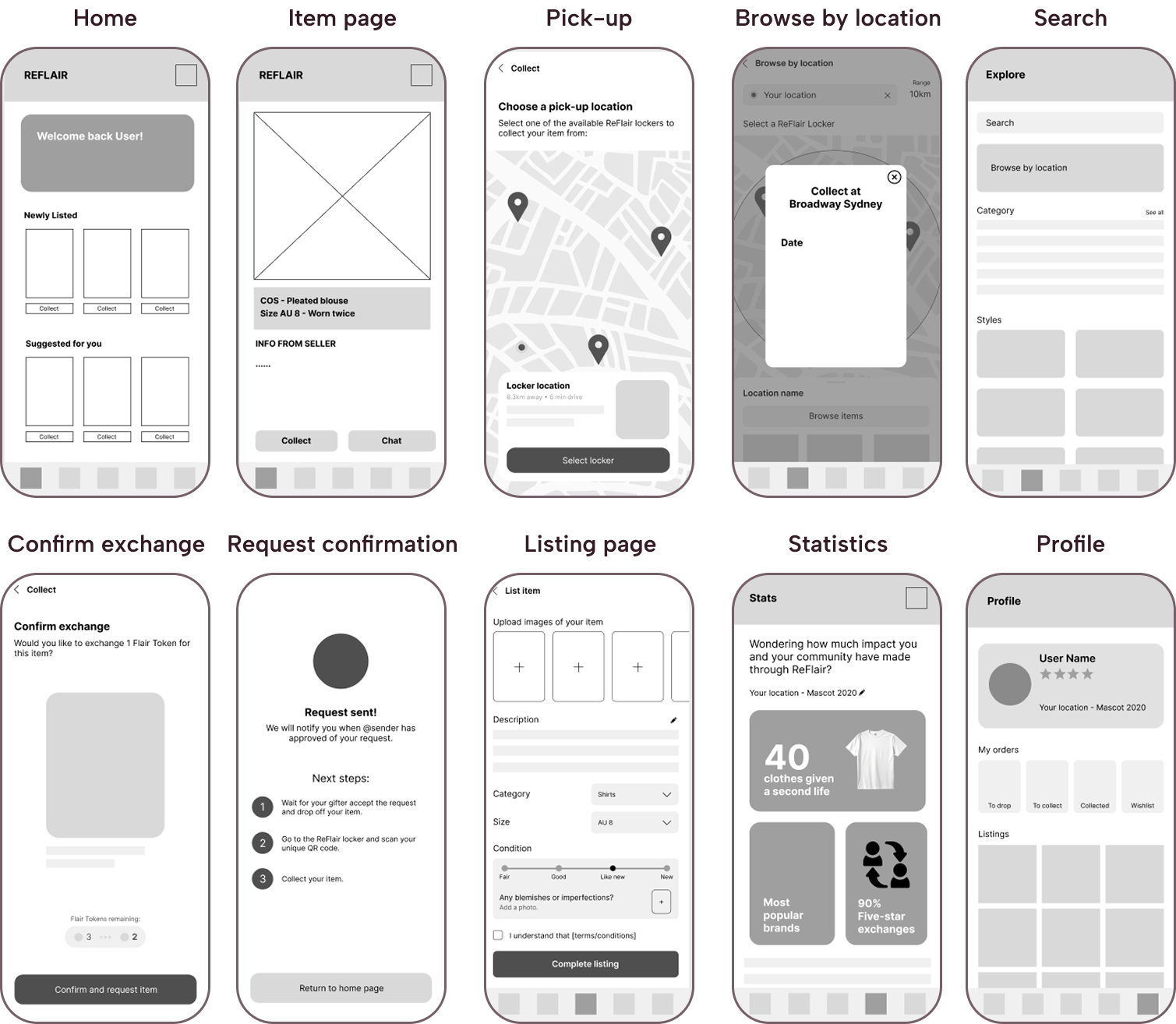
Low-Fidelity Wireframes
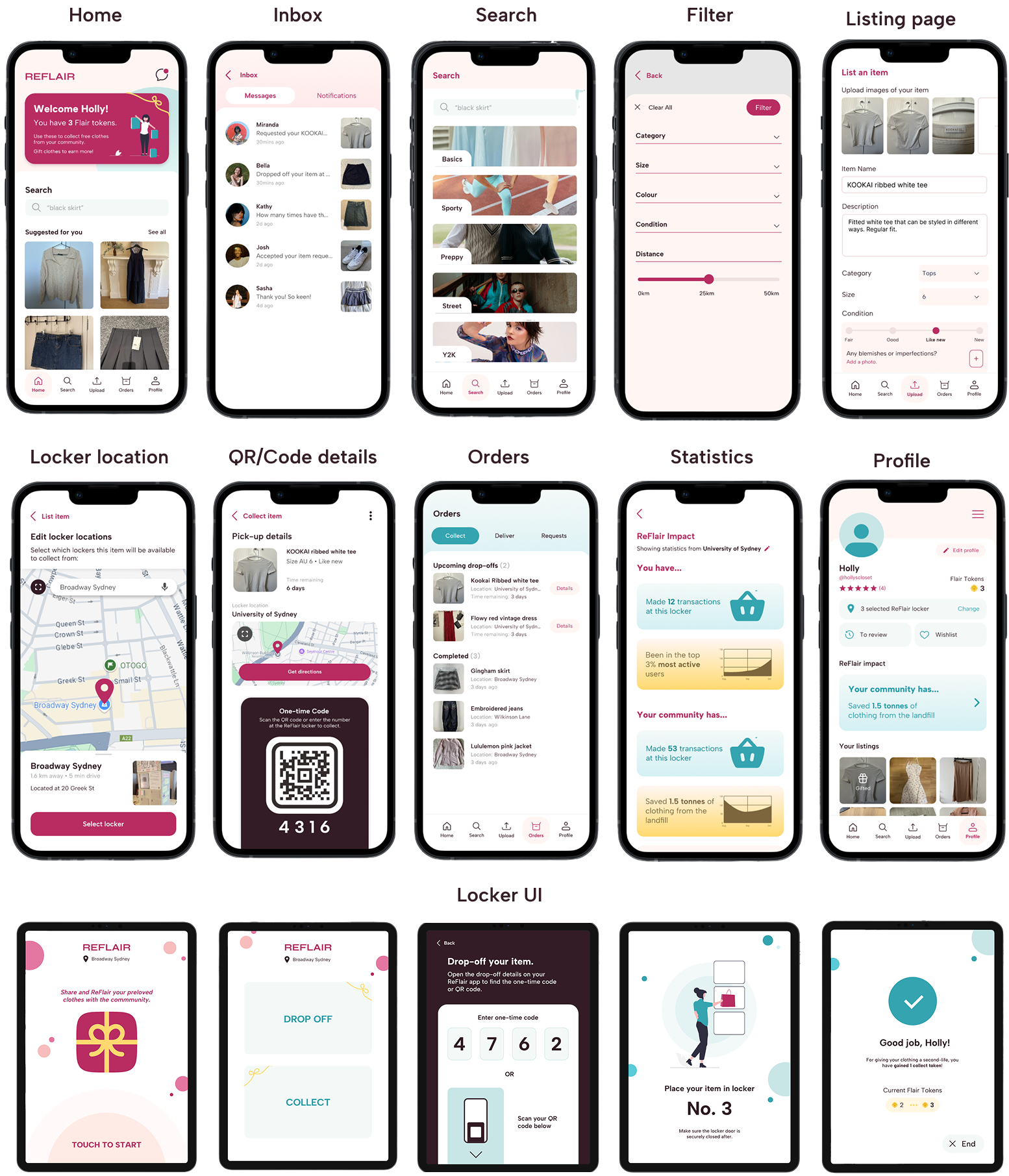
High-Fidelity Wireframes


Challenge | Early prototypes revealed a lack of continuity between the mobile app and locker interface, resulting in fragmented interactions and unclear feedback during collection.
Decision |
Explored and prototyped the physical locker experience using an iPad and physical compartments.
Applied shared visual language and interaction patterns across both touchpoints.
Refined verification flows, instructions, and feedback mechanisms based on user testing.
Outcome | Created a more seamless and intuitive service experience, strengthening the relationship between ReFlair's digital and physical touchpoints.
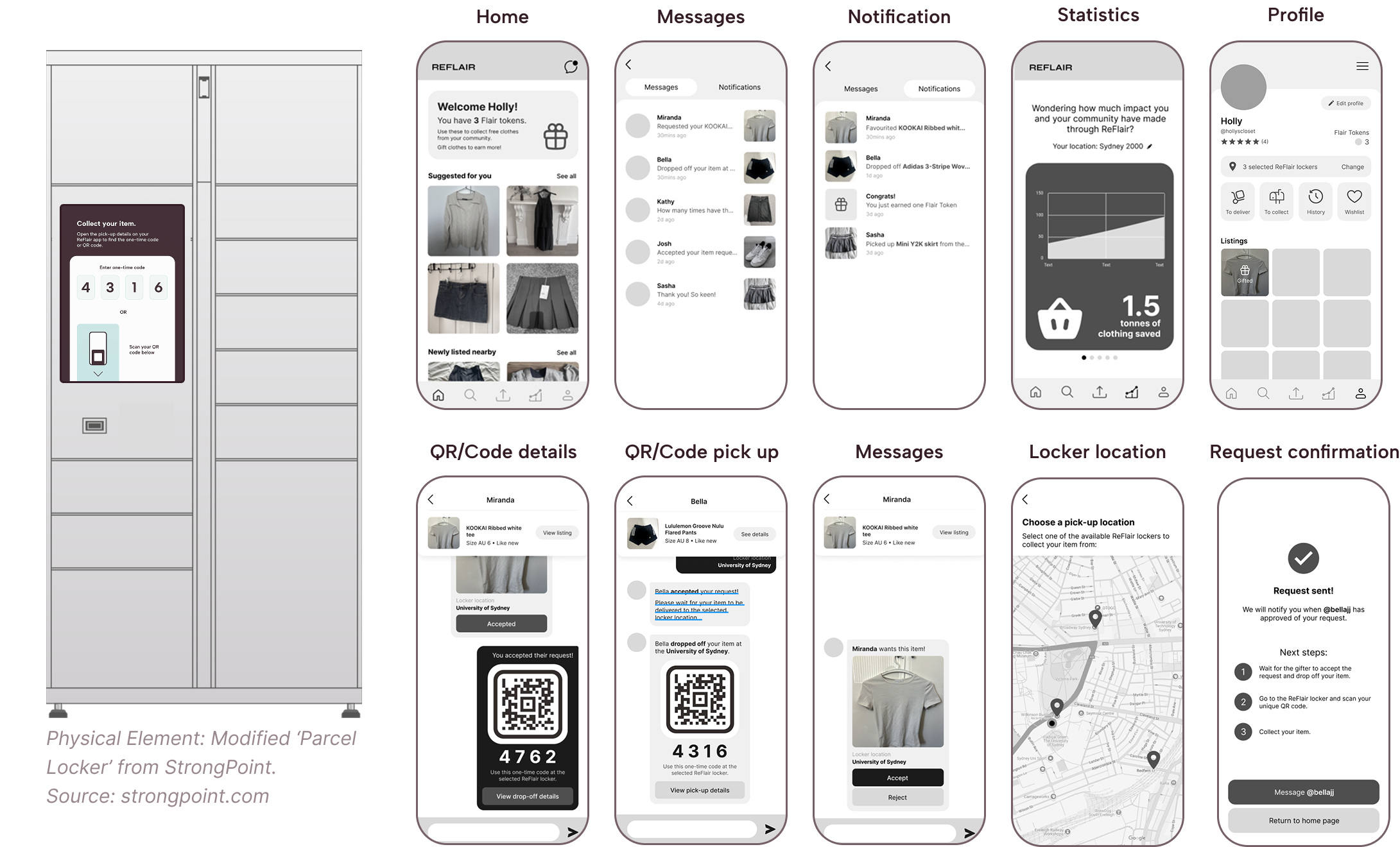
Iterative Design Process
Final Concept Overview