Campus Canvas
Campus Canvas explored how university learning spaces could support both productivity and wellbeing. Through mixed-method research, we discovered that students often felt pressure to remain productive, while opportunities for creativity, rest, and spontaneous social interaction were limited.
Rather than designing another study tool, we reimagined campus spaces as environments that encourage playful engagement and meaningful connections. By combining physical, digital, and spatial interactions, we created an experience that promotes emotional wellbeing alongside academic productivity.
Through iterative research, concept development, and prototyping, we transformed underused campus spaces into shared moments of creativity and relaxation, demonstrating how experience design can foster wellbeing and social connection within educational environments.
February 2023 - June 2023
Figma, Premier Pro
Key contributions
UX Research & Insight Synthesis | Conducted mixed-method research and translated findings into key insights, affinity maps, and opportunities to support student wellbeing.
Experience Design | Designed an interactive concept that integrated physical, digital, and spatial touchpoints to encourage creativity and social engagement.
Journey Mapping & Storyboarding | Developed user journeys and experience flows to define interactions from participation through to collaborative display.
Prototype Development & Testing | Created and refined low- and high-fidelity prototypes through concept testing and iterative usability feedback.
Communication & Storytelling | Planned, recorded, and edited an experience video to demonstrate interactions between the tablet interface, projection system, and physical installation.
Problem Area
University learning spaces often prioritise productivity over wellbeing, creating environments that can contribute to stress and social isolation. Through research, we found that students lacked accessible opportunities for rest, creativity, and spontaneous interaction within these spaces.
User Research
Using a triangulation approach, we combined a questionnaire (110 responses), semi-structured interviews (8 participants), and contextual observations to understand behaviours, motivations, and barriers to engagement.
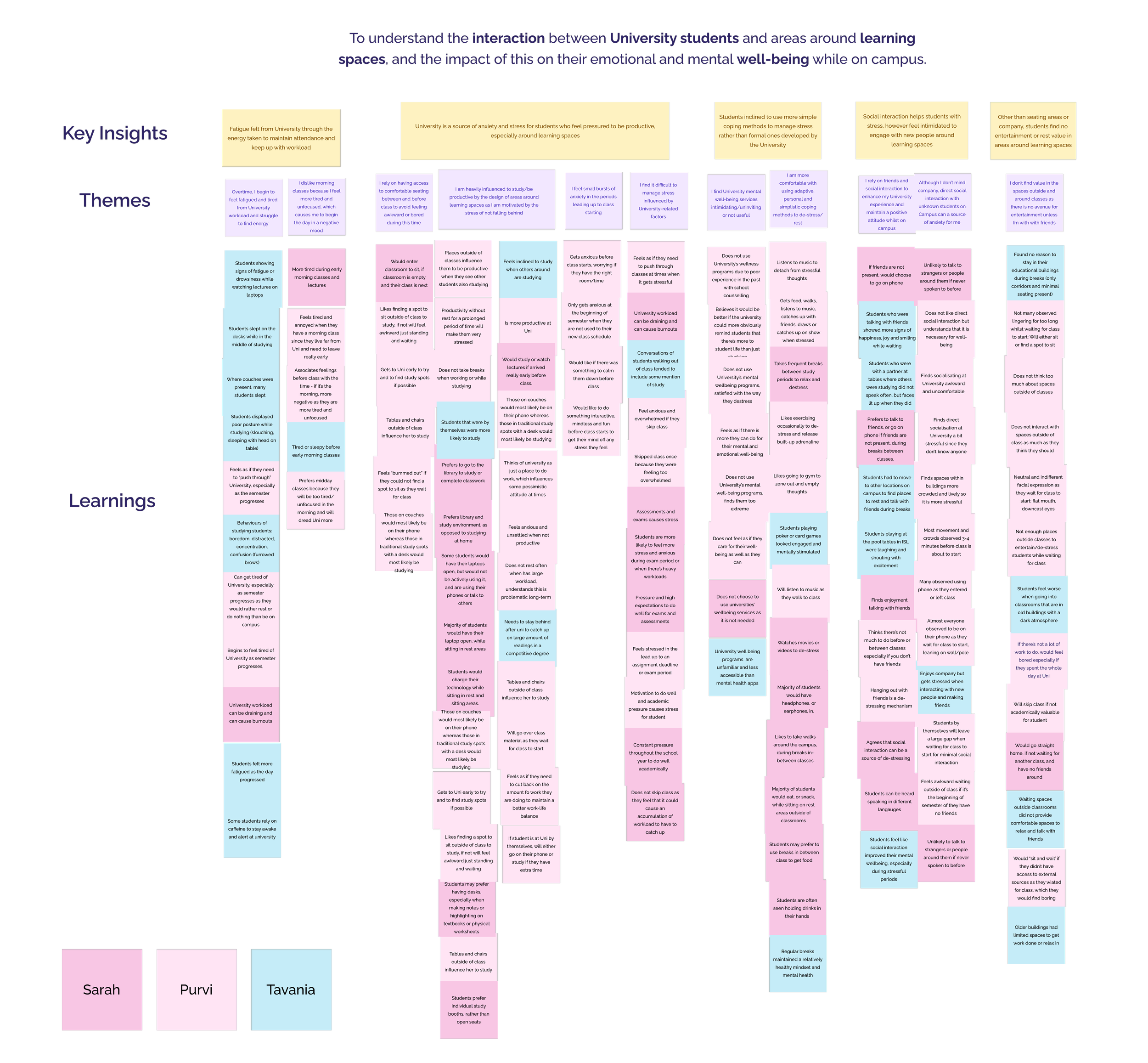
Key themes - such as time use between classes, the importance of rest and social interaction, and accessibility of learning spaces - were identified through empathy mapping and affinity diagramming.

Key insights
Insight 1 | Students feel pressured to be productive due to the serious atmosphere and abundance of seating areas and desks around learning spaces.
Insight 2 | Students inclined to use more simple coping methods to manage stress rather than formal ones developed by the University because they find them uninviting.
Insight 3 | Social interaction helps students with stress, however they feel intimidated to directly engage with new people around learning spaces because it’s a “serious” and productive atmosphere.
Insight 4 | Students find no entertainment or rest value in areas around learning spaces other than seating areas or company.
Through our key insights drawn from research, we were able to validate and enhance our original problem statement. We realised that the issue was not productivity itself, but the lack of balancing it.
We reconstructed the problem statement:
Students need an easy way to feel rested and increase positive interactions with other students around learning spaces, which currently causes stress and apathy and hinders their social and emotional well-being.
Concept Ideation
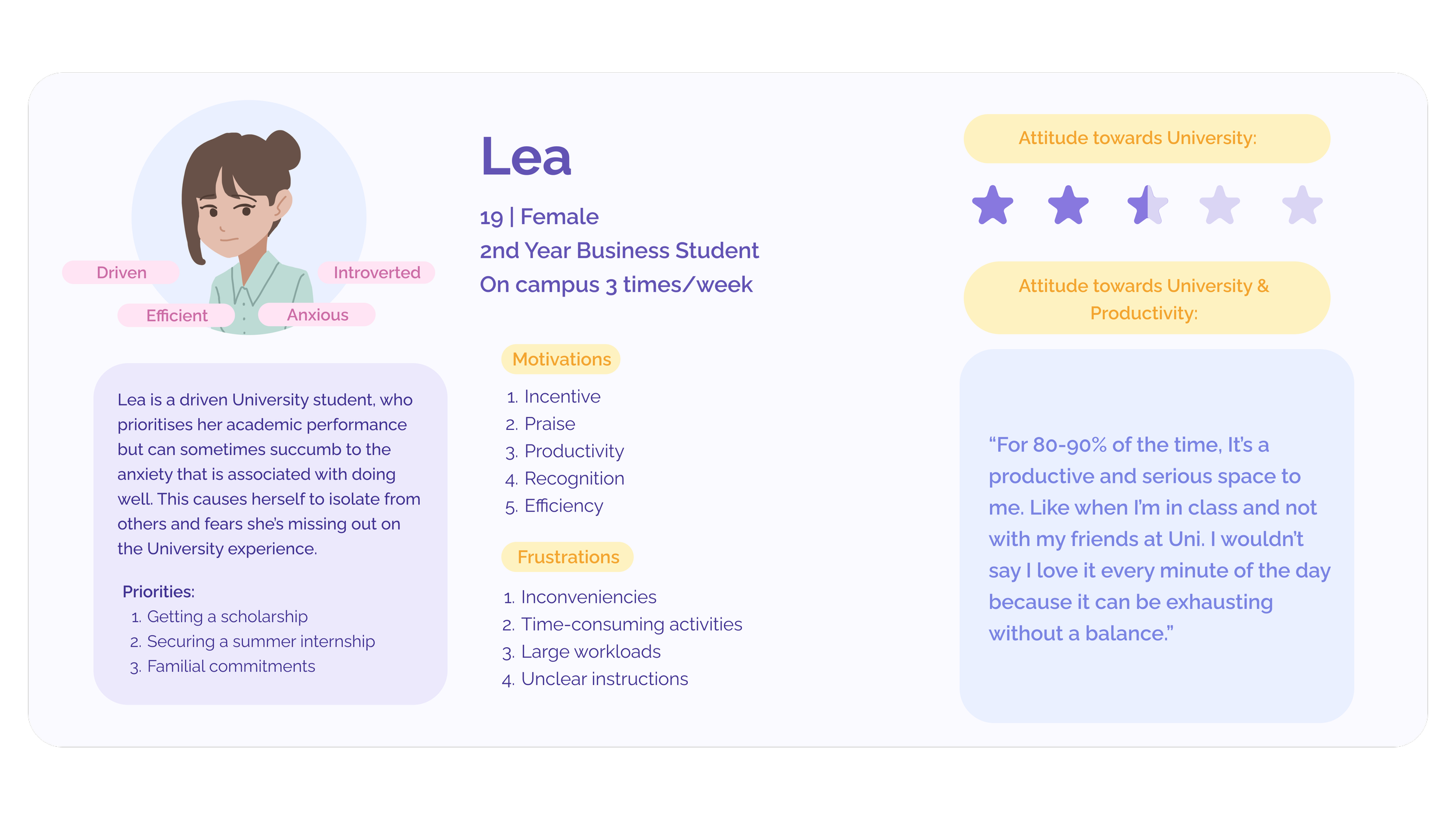
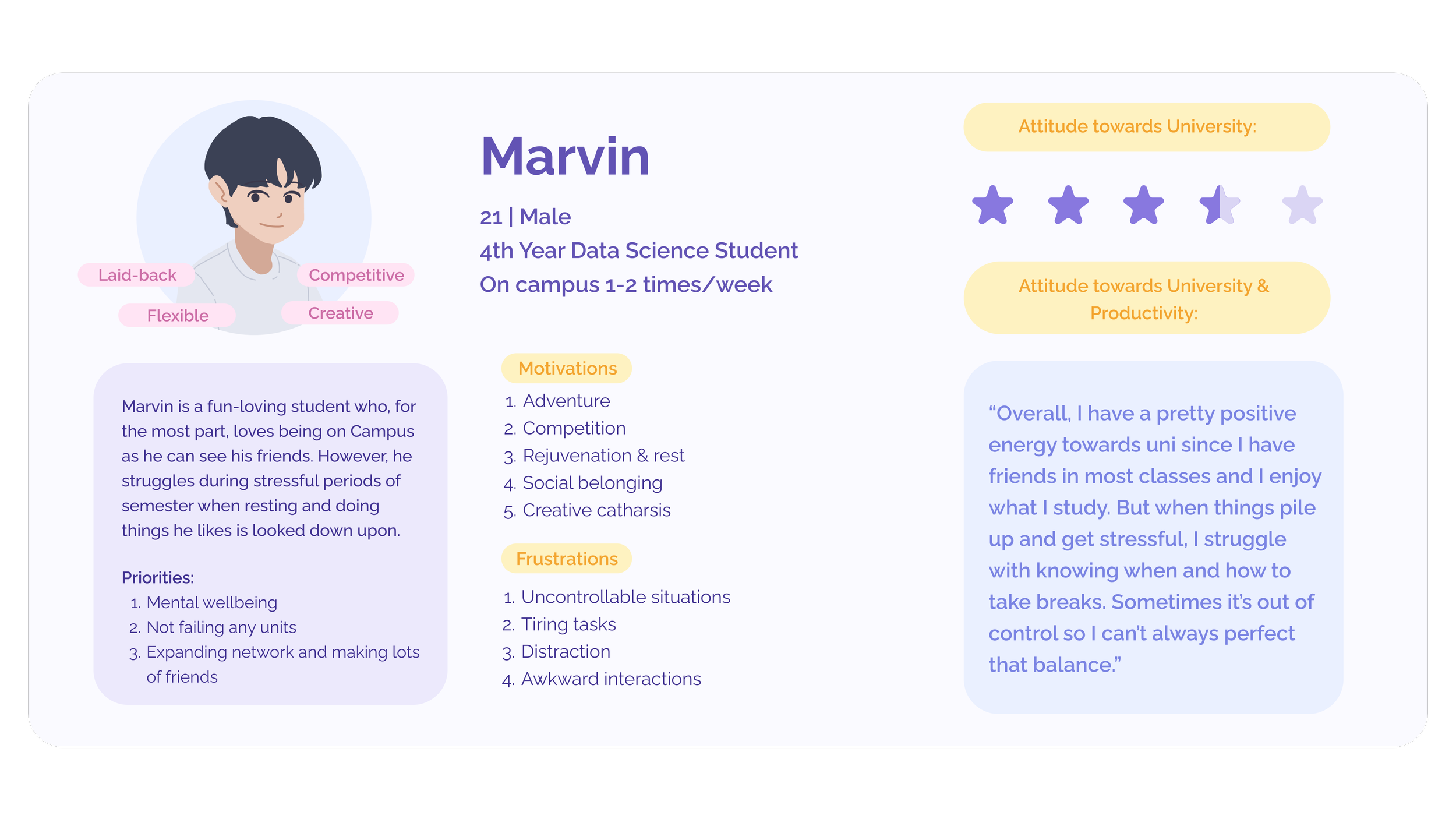
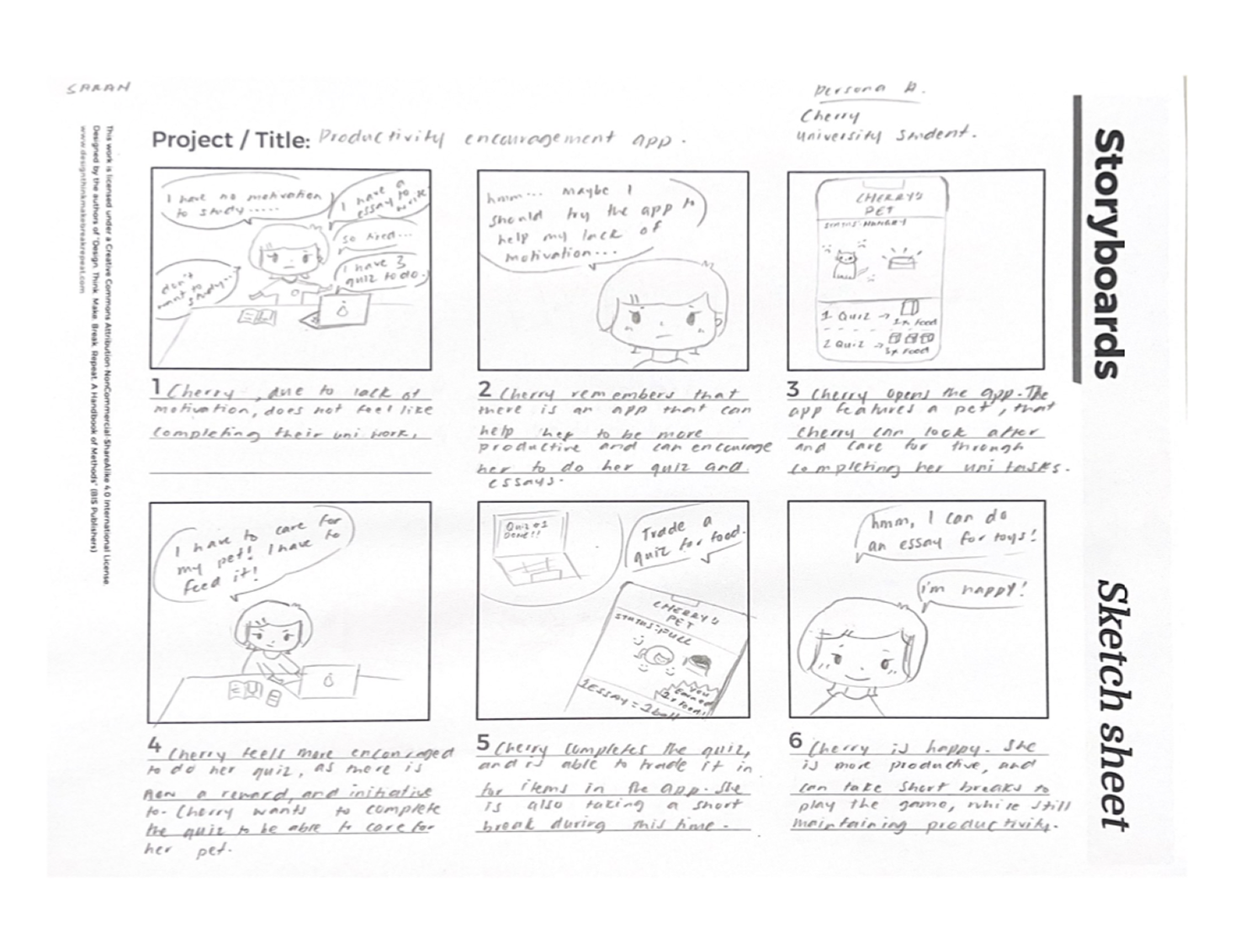
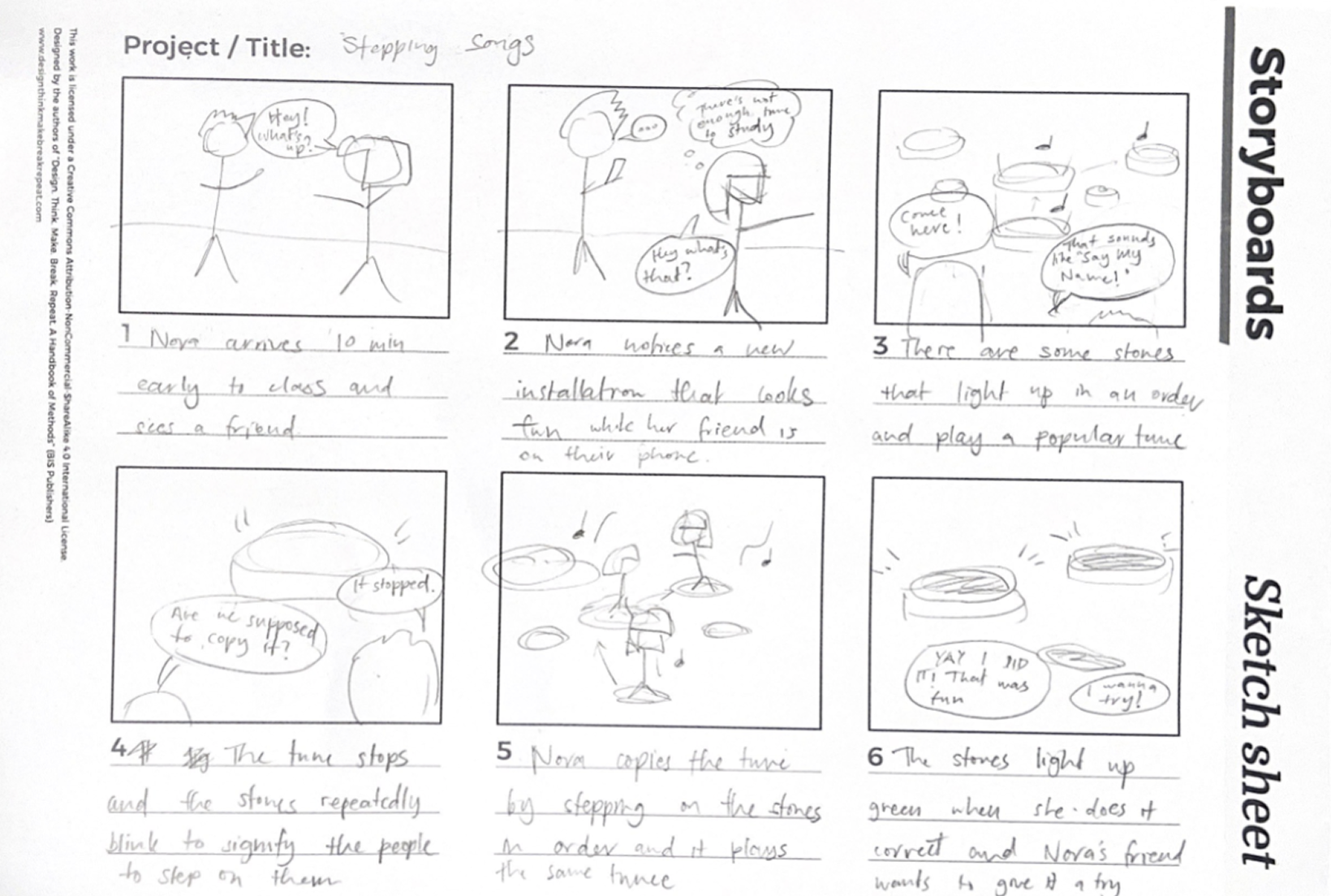
Using mind maps, Crazy 8s, personas, and storyboarding, we explored concepts centred around play, creativity, and restorative experiences before evaluating them using a decision matrix.

Mind-mapping





Designing Campus Canvas
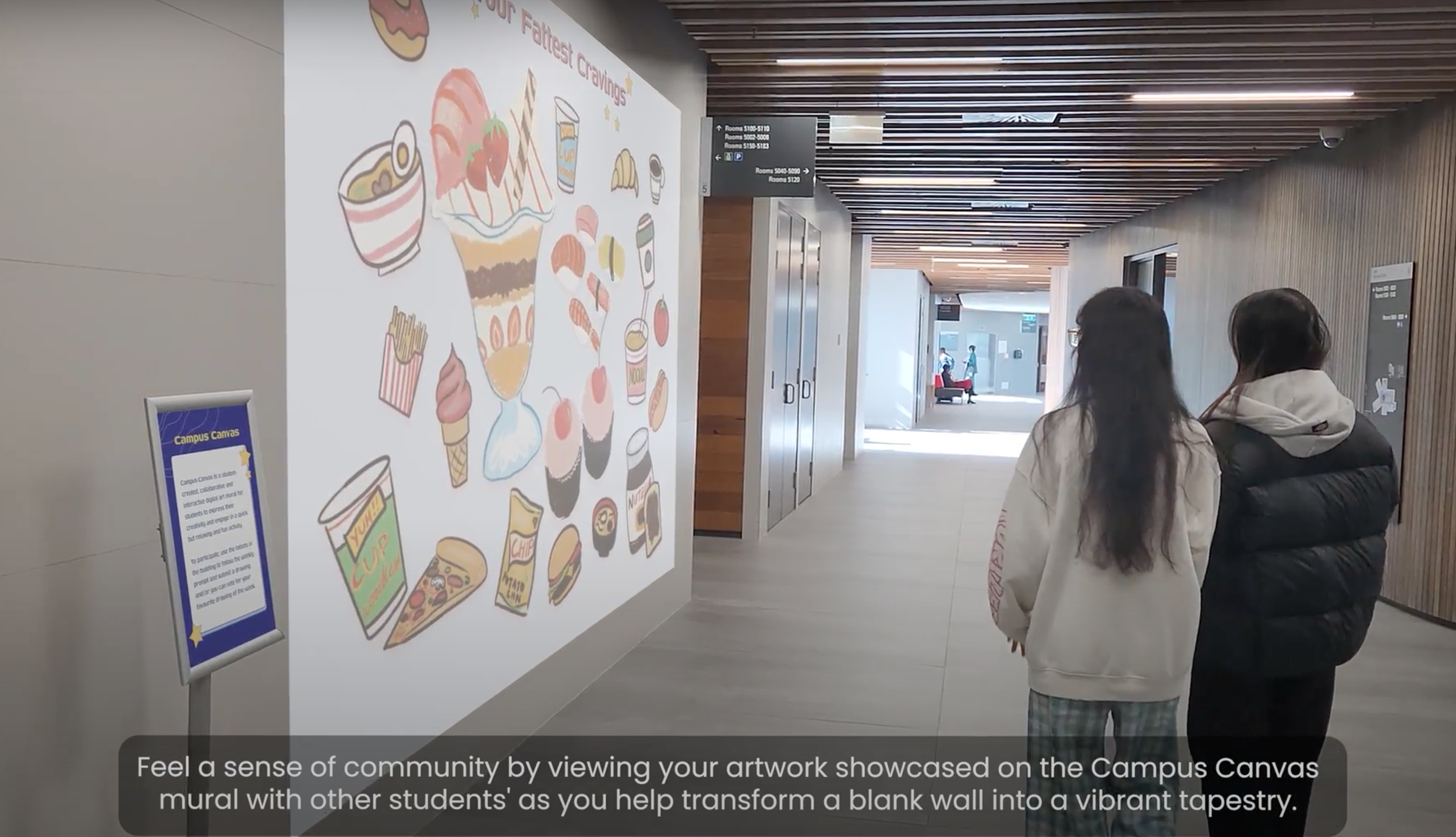
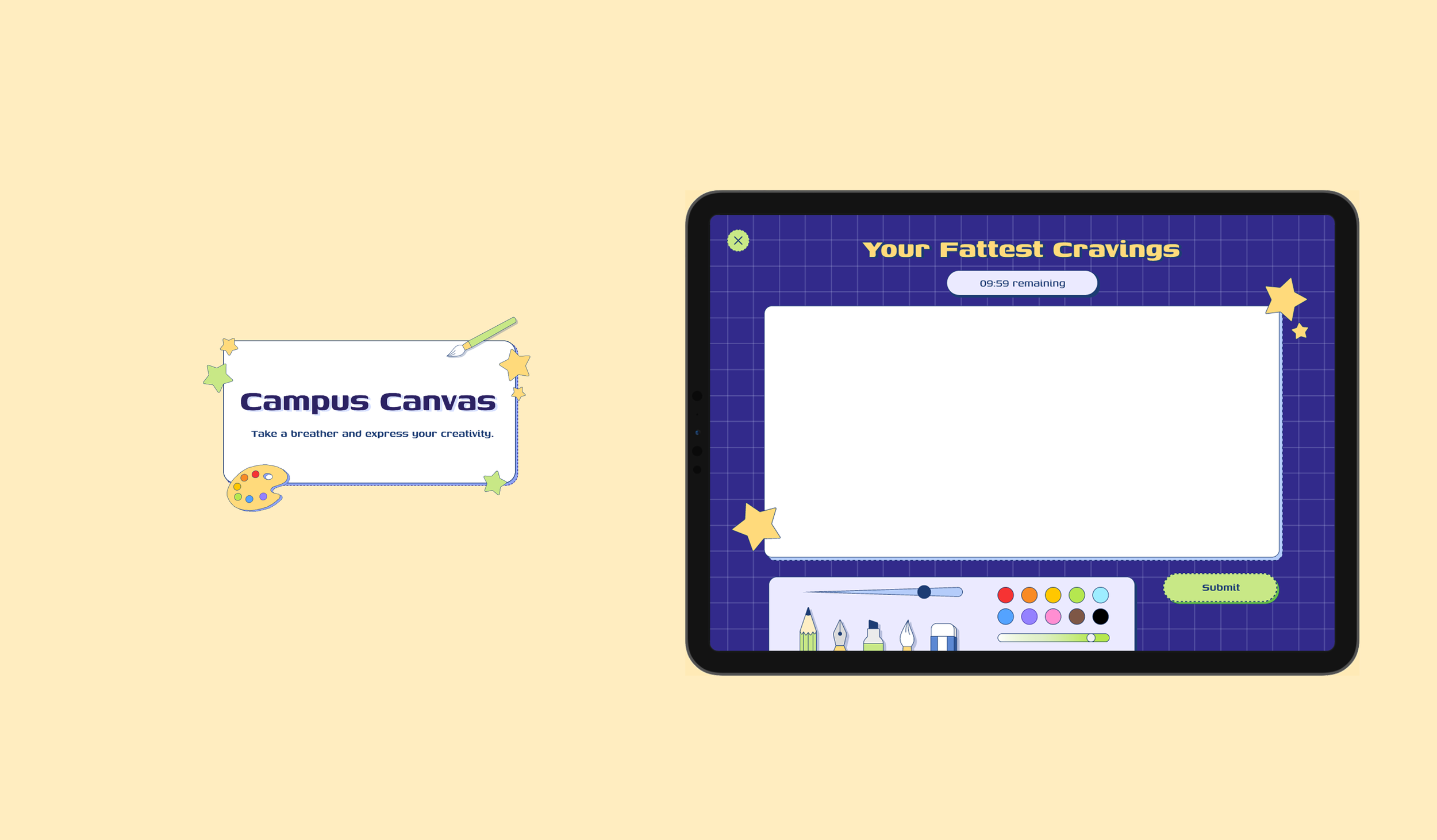
Building on our research findings, we developed Campus Canvas, an interactive digital mural that encouraged students to take short creative breaks and engage with others within learning spaces.
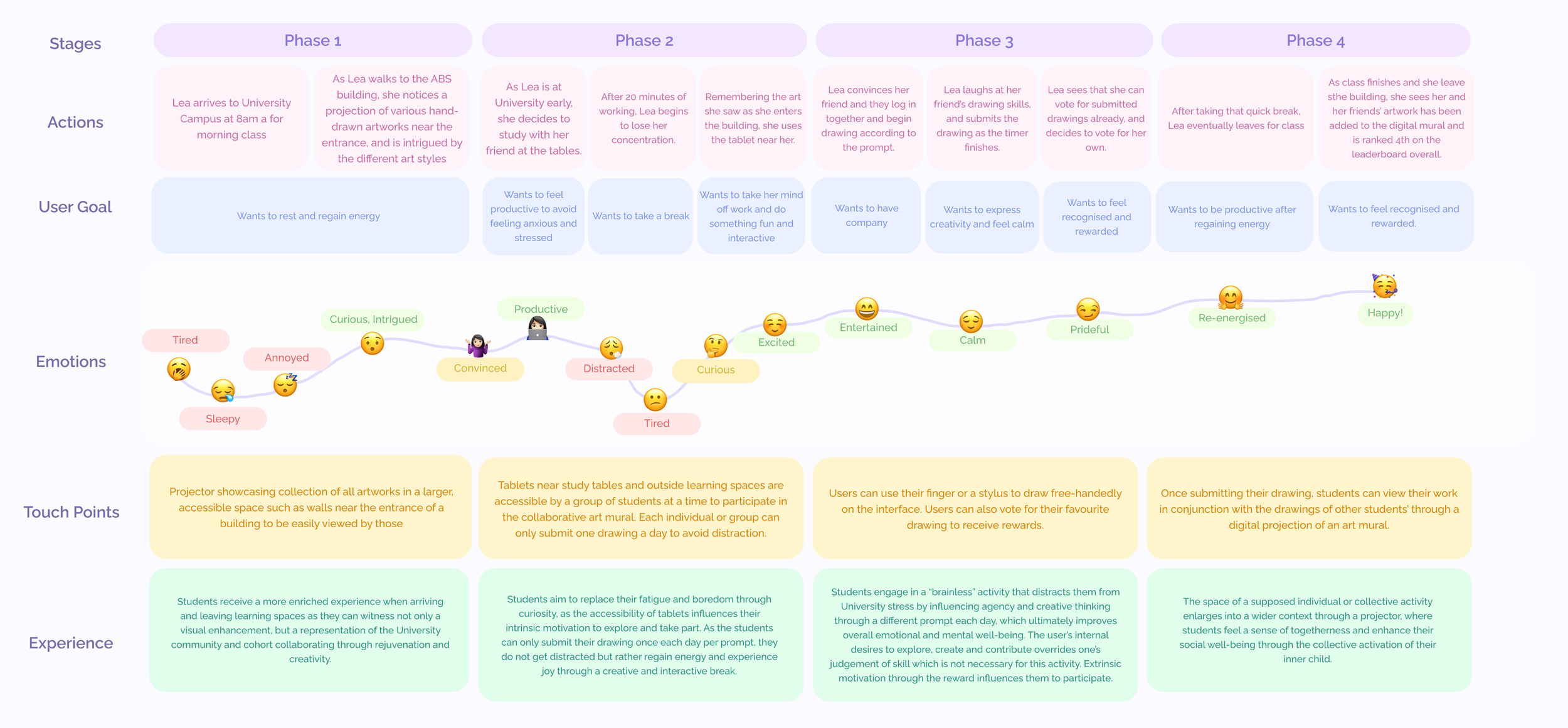
I led the design of the experience flow, mapping interactions from drawing submission to projection and community voting. To ensure feasibility and clarity, I created sketches and journey maps that connected the physical and digital touchpoints throughout the experience.

Mid-fidelity and concept testing
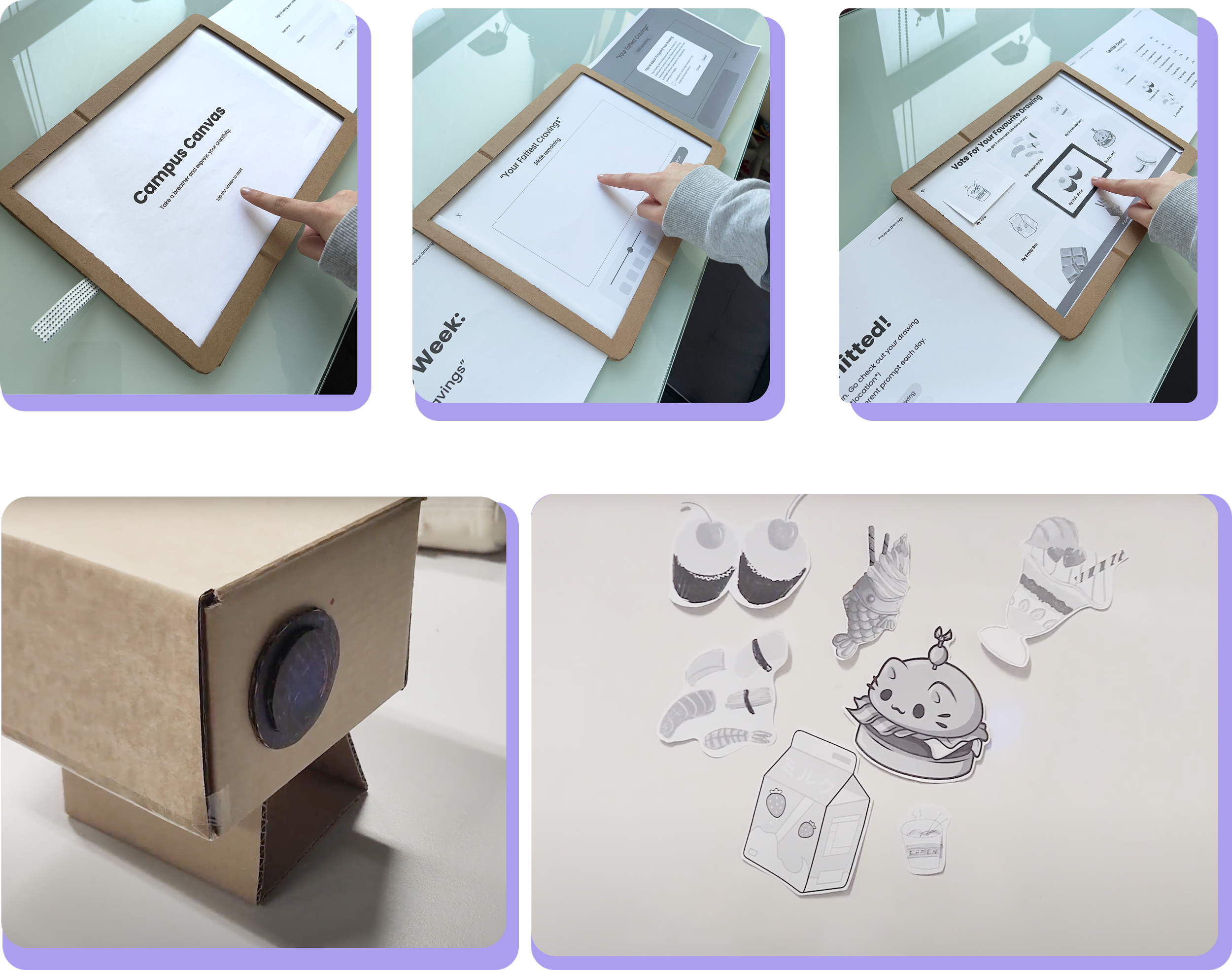
We conducted mini concept tests with seven students, using low-fidelity sketches to gauge interest and refine our design. Users responded positively but raised concerns about inappropriate drawings, time constraints, and distractions. Based on this feedback, we added a submission warning, clearer call-to-actions for drawing or voting, and a central vote button to enhance engagement while maintaining focus.
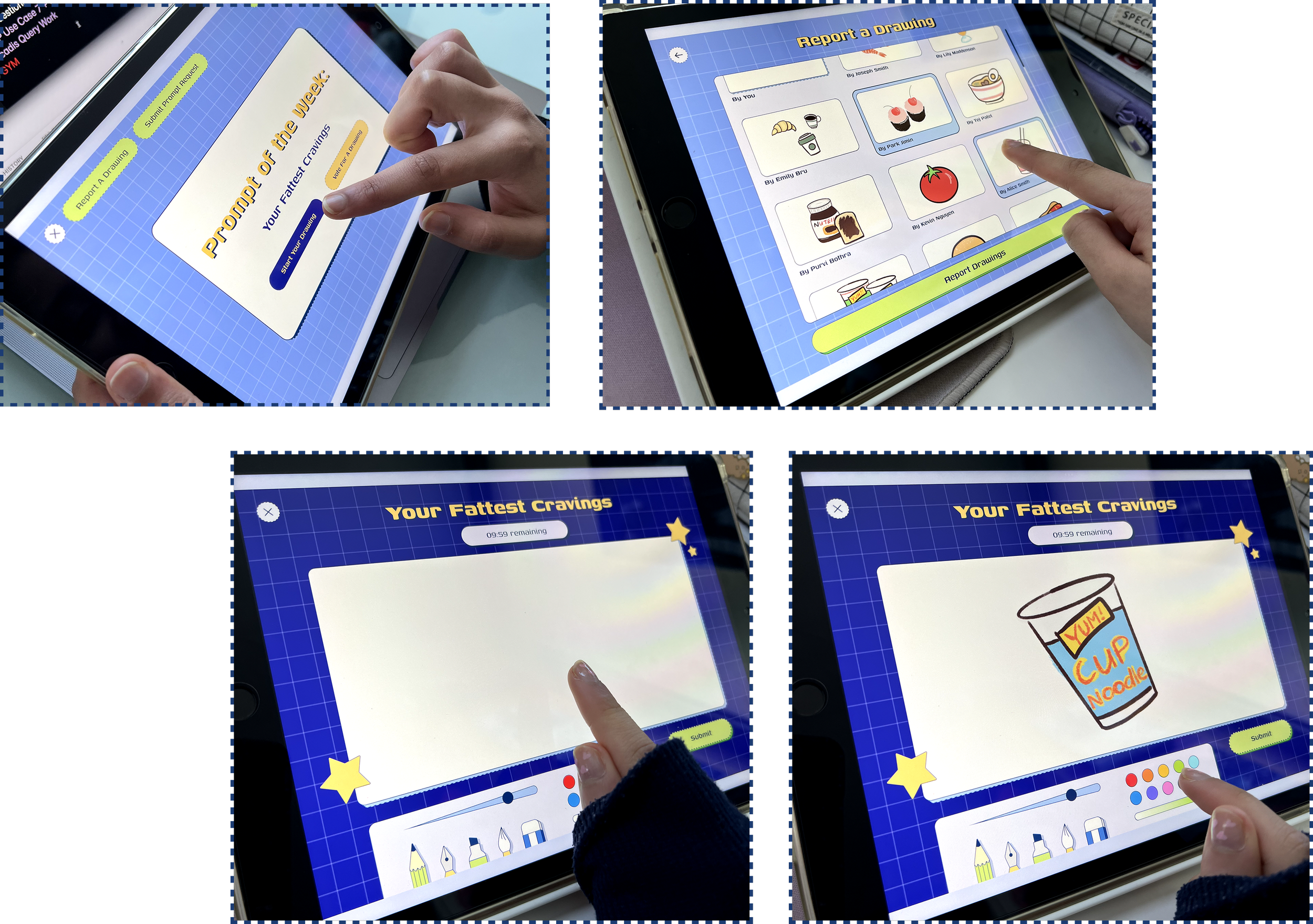
High-Fidelity Prototype & Iteration
Key improvements included:
UI Contrast & Readability: Refined button colours for stronger visibility
Reducing Unnecessary Actions
Simplified navigation (ie, automatic return feature)
Experience Flow: Streamlined transitions between digital, physical, and spatial touchpoints
Outcome | SUS score: 92.1


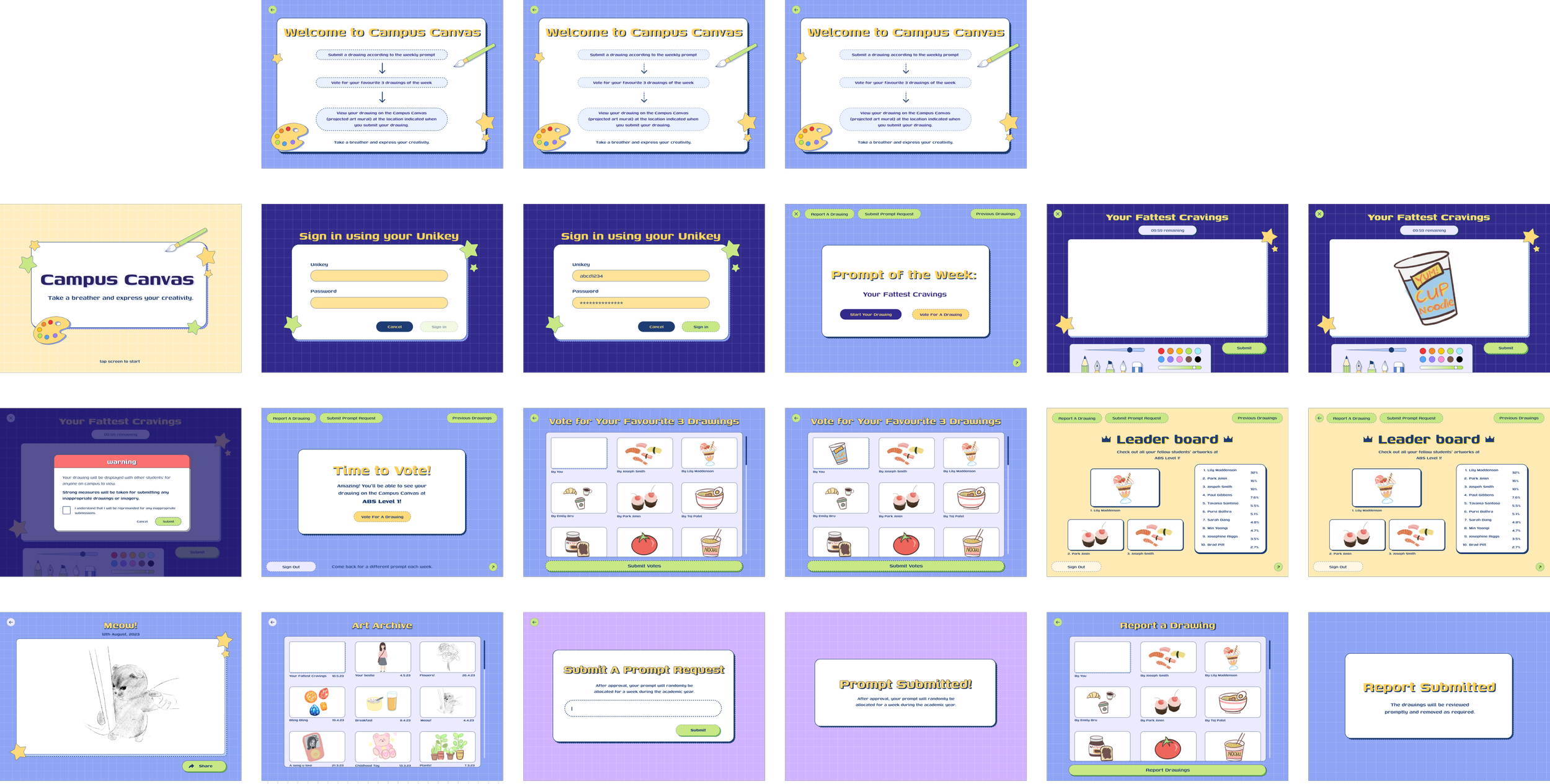
Final high-fidelity prototype
To showcase the complete experience, we developed a high-fidelity prototype demonstrating the full interaction flow - from onboarding and drawing submission to community voting, leaderboards, and moderation features.
Prototype and User Testing
High-Fidelity Video Concept
Campus Canvas
Playful Cities | University Campuses
Reflection
Campus Canvas received a High Distinction and demonstrated how playful digital interventions could support wellbeing and social connection within university learning environments. Through iterative testing, the project evolved into a cohesive physical-digital experience that balanced productivity with creativity and rest.